1 Year Old Milestones: What to Expect and Why
By:Author:Welcome Baby Editorial
Updated on:October 20, 2026

- The Myth That Milestones Arrive on a Fixed Date
- How 1 Year Old Milestones Actually Develop
- What Changes the Pace of 1 Year Old Milestones
- A Sample Week Around the First Birthday
- Fitting Milestone Watching Into a Full Household
- Setting Expectations for the Months Around Age One
- Common Mistakes When Watching for 1 Year Old Milestones
- Recording the First Year of Milestones With Welcome Baby
- Making the First Birthday Stretch Count
By 12 months, most babies are working on a cluster of skills at once: standing, cruising along furniture, maybe a few wobbly steps, a handful of understood words, and a pincer grasp for small bits of food. No single checklist nails it, because the range of normal here is wide.
These skills develop because the brain and body are busy wiring together - muscles get stronger through repeated use, and the nervous system is laying down pathways every time a baby practises reaching, balancing, or babbling back at you.
This guide covers what tends to show up around the first birthday, what actually influences the pace, a sample week of everyday practice, common mistakes, and how to keep a record of it all without the pressure.
The Myth That Milestones Arrive on a Fixed Date
There is no rule saying a baby must walk, talk, or wave bye-bye exactly at 12 months. Milestone charts give a window, not a deadline, and plenty of babies sit comfortably at either end of that window without anything being off.
The idea of a single magic date is appealing because it feels measurable, but development does not work in straight lines - a baby might stall on walking for weeks while their vocabulary takes off instead.
The honest answer: skills show up in a loose order and a wide time range, shaped by practice, body build, and what each baby happens to be focused on that month.
How 1 Year Old Milestones Actually Develop
Around this age, physical and communication skills tend to build in parallel rather than one after the other.
Gross Motor Skills Build on Each Other
Standing unsupported, cruising along the sofa, and eventually a few free steps all rely on the same leg and core strength being built up bit by bit. Each attempt - even the wobbly, failed ones - strengthens the muscles and balance needed for the next attempt to go a little further.
Language Grows From Repeated Sound and Response
A one-year-old's handful of words or sound-approximations come from hearing the same words paired with the same objects or actions, over and over, until the pattern clicks. Pointing, babbling back, and naming things out loud all feed into that same loop.
Both tracks run on the same basic fuel: repetition, a safe space to try, and someone nearby responding to the attempt.
What Changes the Pace of 1 Year Old Milestones
A few factors shape how quickly these skills show up, and none of them are about one baby being ahead or behind in a meaningful sense.
What Actually Moves the Needle
- Amount of practice time - a baby given regular floor time and space to move builds the relevant muscles faster than one who spends most of the day in a seat or carrier.
- Body build and temperament - a sturdier build or a more cautious personality can shift the timing of walking without affecting the end result.
- What skill a baby is focused on - energy spent mastering words can mean motor skills take a back seat for a few weeks, and the reverse is just as common.
A Sample Week Around the First Birthday
Here is one way a week might look for a family wanting to support whatever skill their one-year-old seems drawn to, without turning it into a programme.
A Week Built Around Natural Play
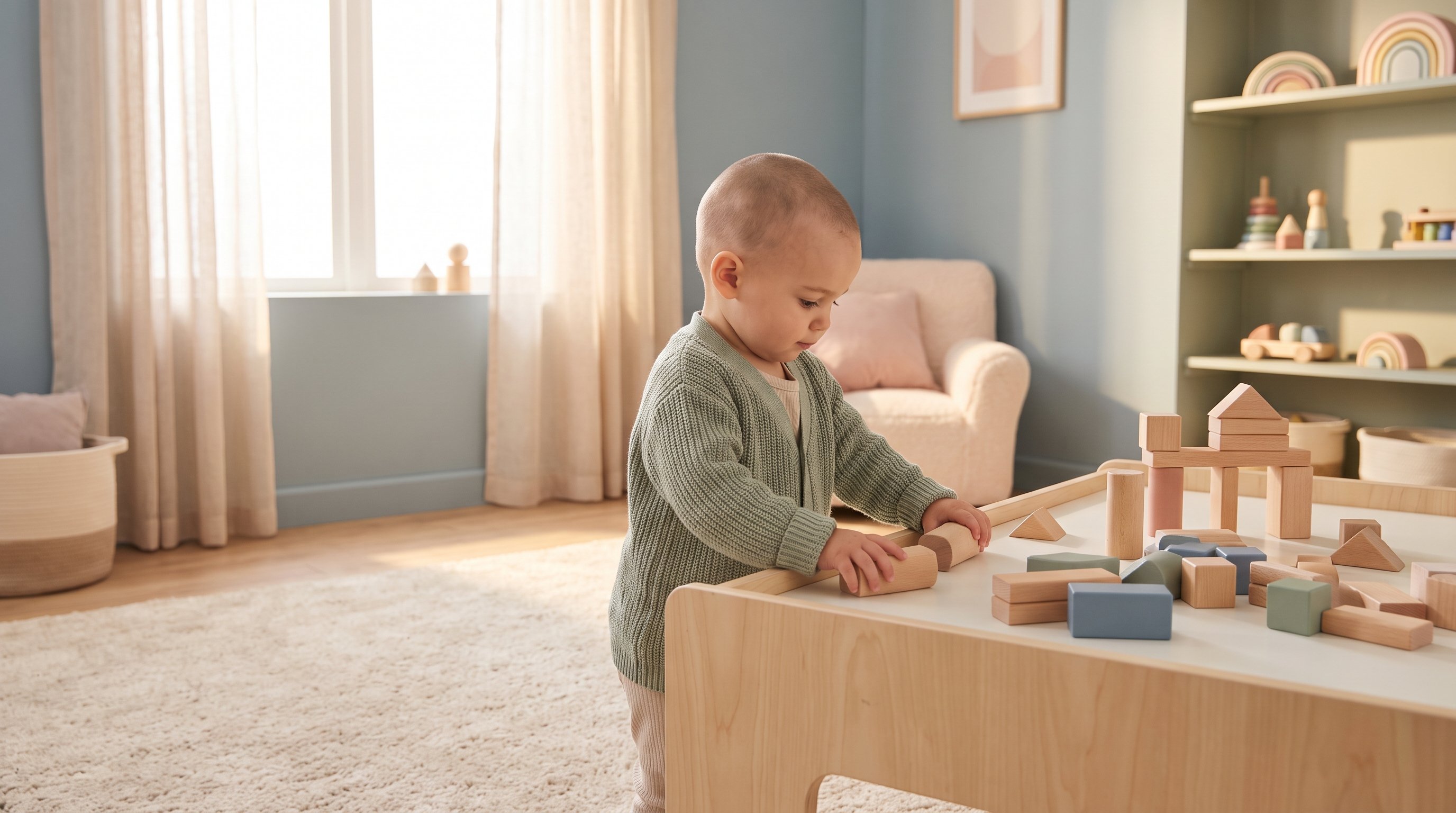
- Monday and Wednesday - open floor time with furniture nearby for cruising practice, no shoes, soft flooring.
- Tuesday and Thursday - narrating everyday tasks out loud (naming food, clothes, bath items) to feed early word recognition.
- Friday - outdoor time on grass or soft ground, which gives a different kind of balance challenge than indoor floors.
- Weekend - slower, unstructured time, letting the baby choose what to practise rather than directing it.
None of this needs to be scheduled to the minute - the pattern matters more than the precision.
Fitting Milestone Watching Into a Full Household
Most families are not tracking milestones in a quiet moment with a notebook open - it happens between making dinner, answering emails, and chasing a toddler away from the stairs.
Noticing a new skill in passing and jotting it down later that evening is realistic in a way that stopping to document everything in the moment is not.
This is where having one place built for exactly this - guided pages that prompt you for what to record and when - takes the guesswork out of it; a milestone tracking tool is built around that kind of structure, so the record-keeping fits around the week instead of competing with it.
Setting Expectations for the Months Around Age One
The months right around the first birthday are where a lot of parents start comparing notes and feeling behind, usually without good reason.
A baby who is cruising confidently but not yet walking independently is still well within the ordinary range, and the same goes for a baby with two or three clear words instead of ten.
Rather than fixing a date in mind for when a skill should appear, it helps to watch for steady progress over several weeks - more attempts, a bit more confidence, a new sound added here and there.
Common Mistakes When Watching for 1 Year Old Milestones
Comparing Against One Other Baby
Every baby's mix of practice time, build, and focus is different, so one child's timeline tells you almost nothing about another's. Compare against the baby's own progress over the last month instead.
Treating a Chart As a Pass or Fail Test
Milestone lists describe a range, not a checklist to clear by a set date. Use them as a rough guide for what to watch for, not a score.
Only Watching for the Big, Obvious Skills
Walking and talking get the attention, but smaller shifts - better balance, more varied babbling, using a finger to point - are just as telling. Noticing those keeps the picture fuller.
Skipping the Record Because Nothing Seems New
Quiet weeks are part of the pattern, not a gap to leave blank. A short note that says nothing much changed still has value later on.
Recording the First Year of Milestones With Welcome Baby
Most of what happens around the first birthday is small and easy to lose track of - a new sound here, a first wobbly step there - unless it is written down close to when it happens.
Welcome Baby gives you guided memory pages built for exactly this stretch of the first year, so there is a clear spot for each milestone instead of scattered notes across your phone.
It is customized to reflect your own baby and family, with a section dedicated to this earliest chapter and gentle prompts to help you capture it as it happens, not months later when the details have blurred.

Prepare For Your Baby
Your Baby Plan
Making the First Birthday Stretch Count
The weeks around a first birthday move fast, and the easiest thing to do right now is pick one habit - a weekly note, a quick photo with a caption - and stick with it rather than trying to capture everything.
A dedicated milestone tracker is designed to grow with that habit, so the record gets more meaningful the longer it is kept, not less.
FAQ
Yes - cruising, standing, and attempting steps are all part of the same build-up, and plenty of babies take their first independent steps after the first birthday rather than before it. What matters more is steady progress over recent weeks, not the exact date.
You cannot force a skill to arrive early, but giving a baby regular, safe space to practise - floor time, things to pull up on, plenty of talking and naming - supports whatever they are already working toward. The body and brain still set the pace.
A baby can look behind on several fronts in the same month simply because their energy is going elsewhere, including sleep changes or teething. If several skills seem stalled for an extended stretch rather than just a few weeks, it is worth mentioning to whoever handles your baby's checkups.
A short weekly note works better than trying to remember everything later, and a guided format makes it quicker to stick with. Welcome Baby's structured pages give each milestone its own spot, which takes the guesswork out of what to write and when.
Share this post