Baby Massage: A Guide to Touch, Bonding and Calm
By:Author:Welcome Baby Editorial
Updated on:October 20, 2026
- Setting Up a Simple Routine That Sticks
- How Often Baby Massage Actually Helps
- Making Touch Time Work Around a Busy House
- A Four-Stage Way to Build the Habit
- When Baby Massage Starts to Feel Natural
- Mistakes That Make Baby Massage Feel Like a Chore
- Keeping the Baby Massage Routine Somewhere Lasting
- Making This Quiet Habit Worth Remembering
A few minutes of slow, gentle touch after a bath or before bed is really all this is - no special oils or training required. The effect comes from the routine itself: a calm voice, warm hands and a predictable sequence that your baby starts to recognise.
Touch is one of the few senses that's well developed from birth, so skin-to-skin contact gives your baby something concrete to settle into, even before sight or hearing catch up.
This guide covers the basic steps, how often to do it, a simple four-stage way to build the habit, the mistakes that stall it, and when to expect it to feel natural rather than awkward.
Setting Up a Simple Routine That Sticks
You don't need a course to get started. A few basic steps, done in the same order each time, are enough to build a routine your baby can anticipate.
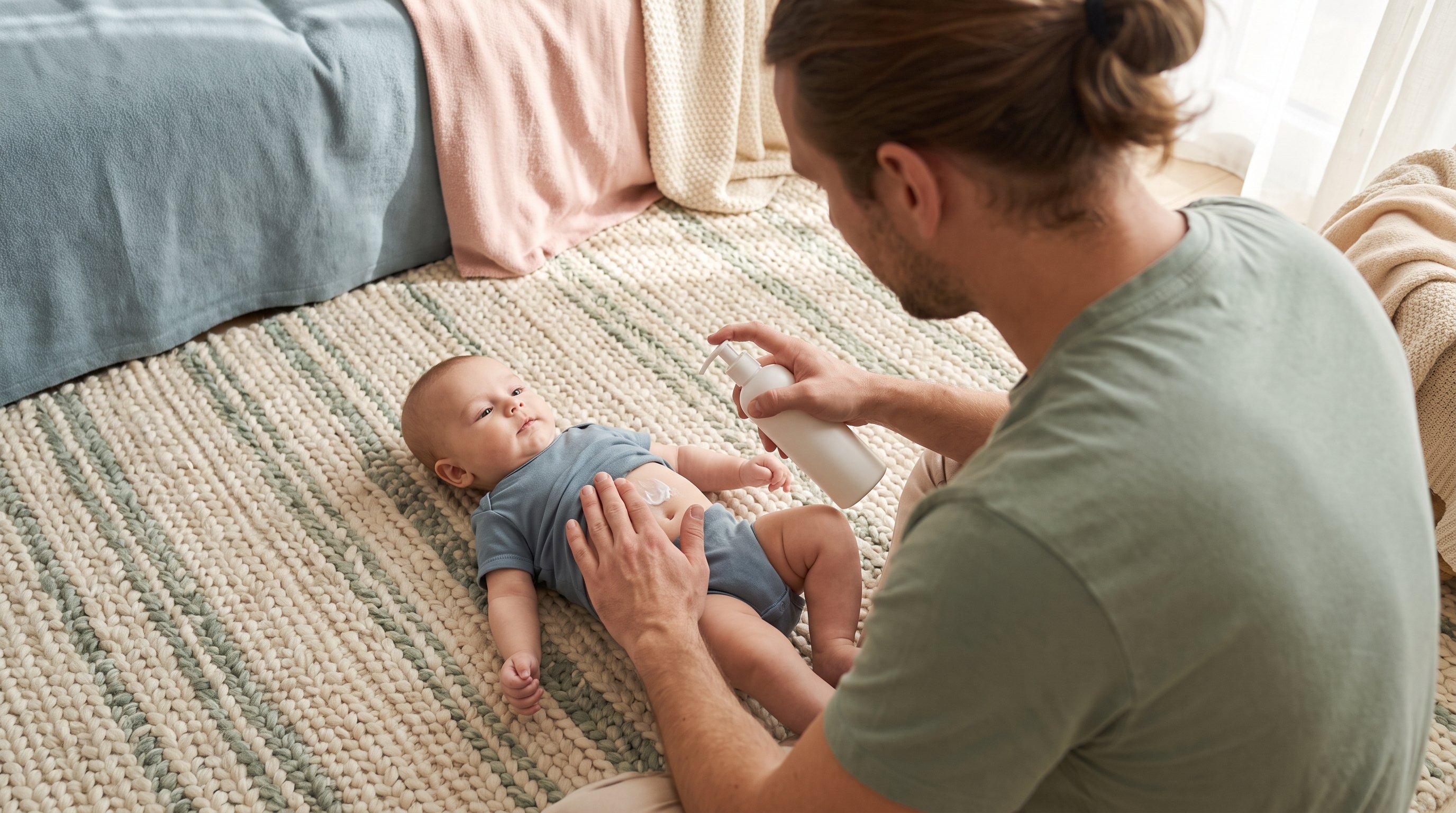
Steps to Get Started
- Pick a calm window - after a bath or before a nap, when your baby isn't overtired or hungry.
- Warm the room - a comfortable temperature matters more than any product you use.
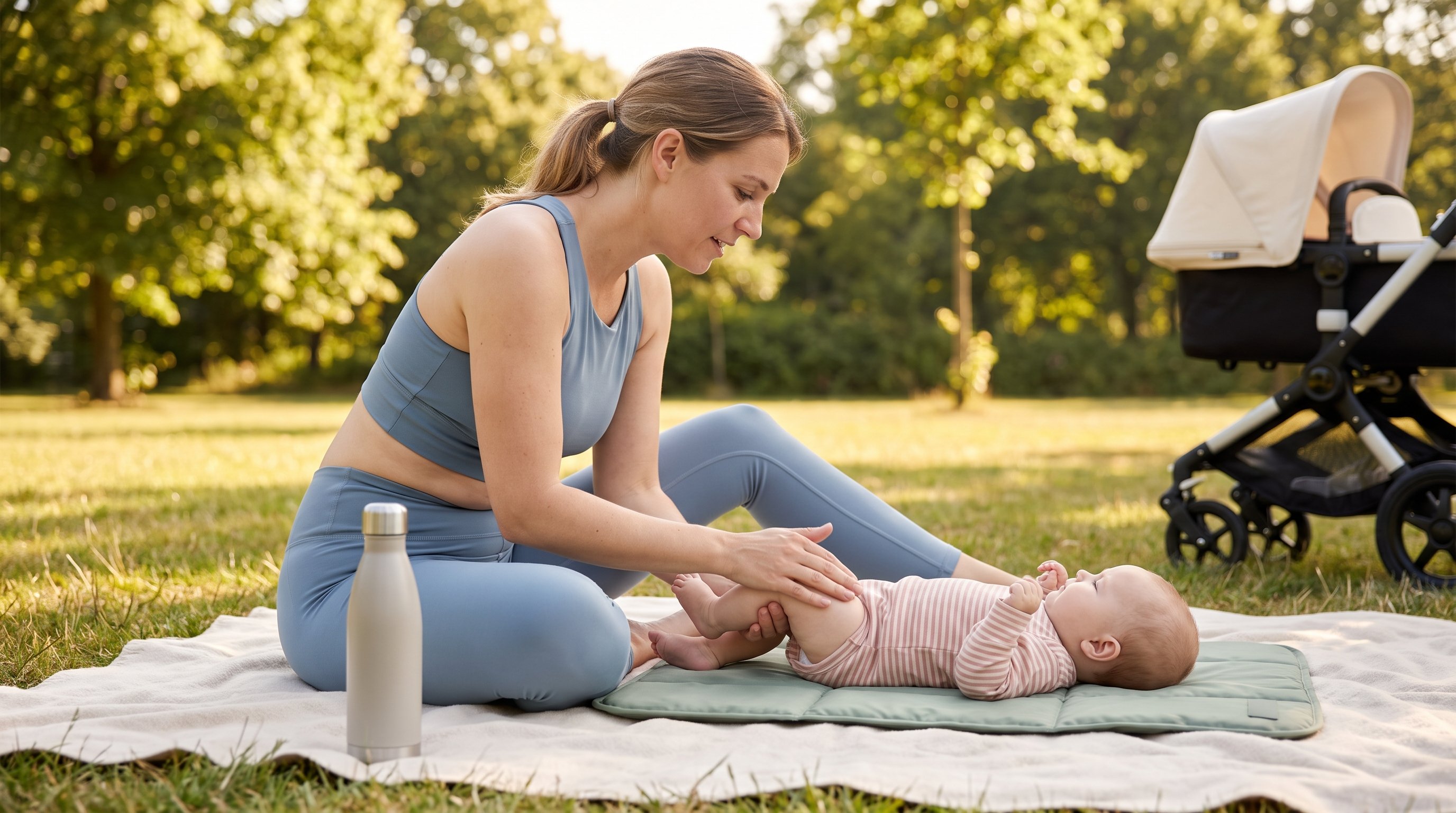
- Start with the legs - long, slow strokes from hip to foot tend to be the easiest place to begin.
- Move to the arms and hands - gentle, unhurried, following the same direction each time.
- Circle the chest and tummy lightly - keep the pressure soft and watch your baby's reaction.
- Finish with the back - once your baby is relaxed, a few strokes along the back can wind the session down.
- Stop if your baby seems unsettled - there's no fixed order that has to be finished.
The order matters less than the consistency - repeating roughly the same sequence is what helps your baby recognise it as a signal to relax.
How Often Baby Massage Actually Helps
There's no minimum dose that makes this work - a short session most days is enough to build familiarity.
A Rough Guide You Can Adjust
Shorter and more frequent beats long and occasional, especially in the early weeks when attention spans are brief.
| Age | Session Length | Suggested Frequency |
|---|---|---|
| Newborn | 2-3 minutes | Most days |
| 1-3 months | 5 minutes | 4-5 times a week |
| 3-6 months | 5-10 minutes | A few times a week |
| 6 months plus | 10 minutes | As it fits the routine |

These are starting points, not targets - some babies settle into longer sessions quickly, others prefer short and frequent for months.
Making Touch Time Work Around a Busy House
Generic advice to 'massage your baby daily' falls apart fast once you're juggling feeds, naps and everything else - the fit matters more than the frequency.
Attaching it to something you already do - straight after a bath, right before the last feed of the day - removes the need to remember a separate step.
This is also a moment worth holding onto, not just performing - noting how your baby responds, what calmed them, what didn't, turns a routine into a memory worth keeping.
Welcome Baby gives you a place to jot those small details down, so the version of this routine that worked for your baby doesn't just fade once the stage passes.
A Four-Stage Way to Build the Habit
Rather than aiming for a perfect routine on day one, build it in stages so neither of you feels rushed.
| Stage | What to Add |
|---|---|
| Stage 1 | Legs and feet only, 2 minutes |
| Stage 2 | Add arms and hands, 3-4 minutes |
| Stage 3 | Add chest and tummy, 5 minutes |
| Stage 4 | Full routine including back, 5-10 minutes |
Moving to the next stage only when the current one feels easy, rather than on a fixed schedule, keeps the whole thing low-pressure.
When Baby Massage Starts to Feel Natural
There's no fixed week where this suddenly clicks - some babies settle into it within days, others take longer to stop fidgeting through it.
What usually shifts first isn't the baby's reaction but yours - the strokes stop feeling like a technique and start feeling automatic.
If a session still feels effortful after a few weeks, that's not a sign it's failing - it just means the routine hasn't become familiar yet, and that's fine.
Mistakes That Make Baby Massage Feel Like a Chore
Treating It Like a Task to Finish
Rushing through a fixed sequence to tick a box tends to make babies tense up rather than relax - slow down or cut the session short instead.
Doing It Right After a Feed
A full stomach and gentle pressure on the tummy don't mix well - leave a gap after feeding before you start.
Ignoring Signs of Discomfort
Squirming, arching or turning away usually means stop, not push through - following your baby's cues matters more than finishing the routine.
Comparing to Other Babies
Some babies love it from the first try, others need weeks to tolerate it - there's no race, and no version of this that's wrong.
Keeping the Baby Massage Routine Somewhere Lasting
A quiet routine like this rarely gets written down anywhere, which means the small details - the song you hummed, the stage your baby finally relaxed - tend to disappear.
Welcome Baby is built with guided memory pages that give this kind of everyday moment a proper place, not just the big milestones.
Because it's designed to grow with you rather than be filled in one sitting, you can add to it whenever a detail feels worth keeping, whether that's this week or six months from now.
Prepare For Your Baby
Your Baby Plan
Making This Quiet Habit Worth Remembering
Start small, stay consistent, and don't worry about getting every stroke technically correct - the calm that comes from repetition is the real point.
Welcome Baby can hold the small notes about how this routine unfolded for your family, so it's there to look back on long after the sessions themselves are a memory.
FAQ
The slow, repetitive touch combined with a familiar routine tends to help babies settle, though every baby responds a little differently. It works best as part of a predictable sequence rather than a one-off attempt.
Crying usually means it's the wrong moment, not that massage doesn't suit your baby - try a calmer window, after a bath or before a nap. Shortening the session to a minute or two and building up slowly often helps more than pushing through.
No product is required to begin - clean, dry hands and a warm room are enough. Anything you add later is optional, not essential to the routine working.
Most parents mean to write it down and then forget within a week, which is normal given everything else going on. Welcome Baby's guided pages give you a simple spot to capture it later, even a line or two, without needing a separate journal.
Share this post