How To Do Tummy Time With Newborn: A Calm Starter Routine
By:Author:Welcome Baby Editorial
Updated on:October 20, 2026
- Does Tummy Time Actually Make a Difference?
- Floor Time, Lap Time, or Chest Time: Picking a Start
- Why Short and Frequent Beats One Long Session
- Adjusting Tummy Time for Different Newborn Moods
- Fitting Tummy Time Into a Newborn's Actual Day
- The Myth That Tummy Time Speeds Up Every Milestone
- Keeping the Tummy Time Habit in Welcome Baby
- Making Tummy Time a Normal Part of the Week
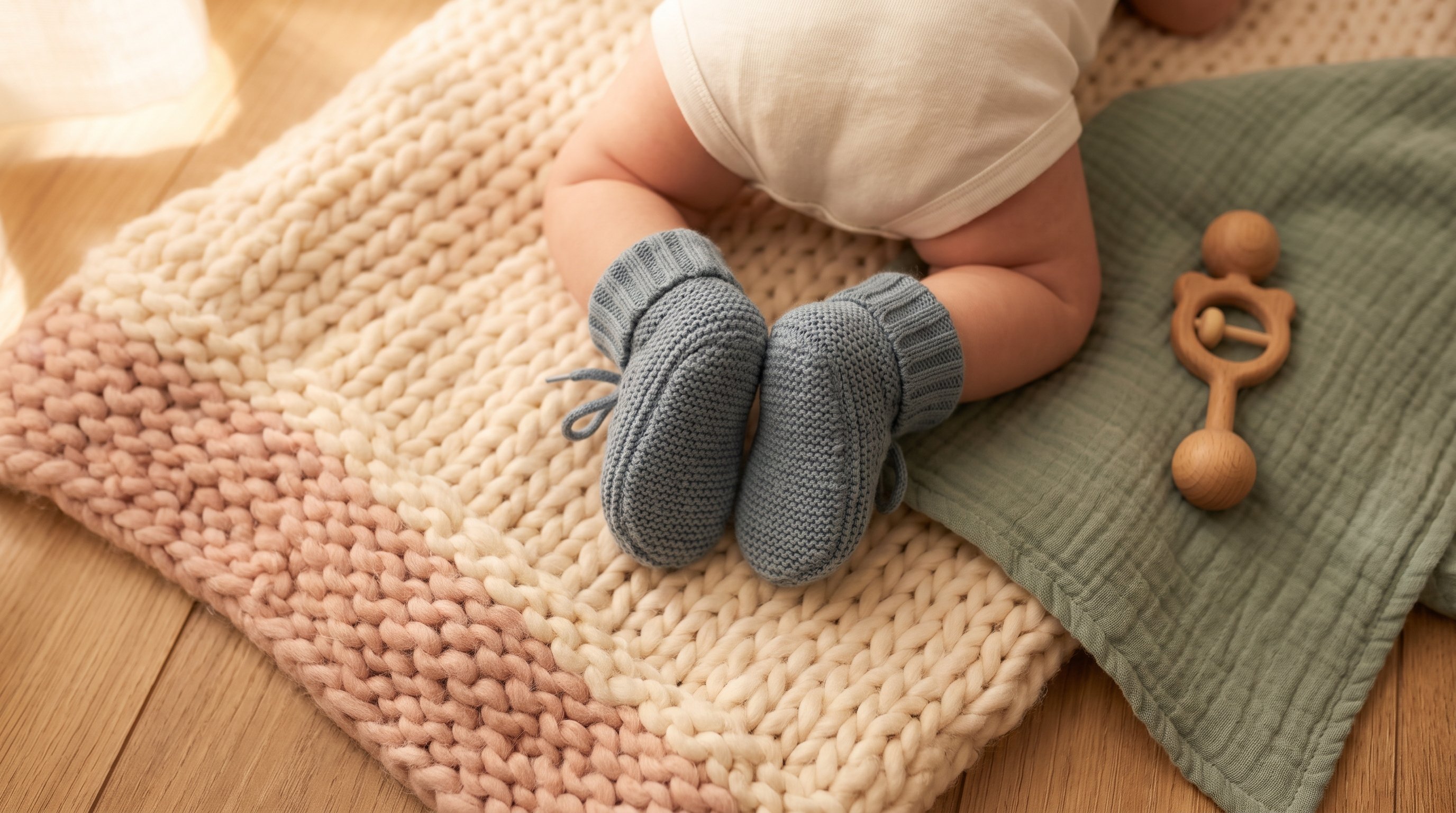
Tummy time with a newborn is simple: lay your baby on their front, on a firm surface, for a few short stretches a day, while you stay close and watch. That's the whole method - the rest is just working out when and how often it fits your day.
The mechanism is straightforward too. Lying face-down forces a newborn to lift and turn their head against gravity, which works the neck and shoulder muscles they'll later use to hold their head steady, push up, and eventually roll.
This article covers how much tummy time actually helps, what it looks like day to day, how to adjust it for different babies, and how to keep track of it without turning it into a chore.
Does Tummy Time Actually Make a Difference?
Yes, in a mechanical sense - it's the one position that asks a newborn's neck and upper back to work against gravity instead of being supported by a mattress or your arms.
Back-lying and being carried both support the head for the baby. Tummy time removes that support for a short, supervised stretch, so the muscles involved in head control get a small workout they don't get anywhere else.
The arithmetic is plain: a newborn who spends a few minutes a day on their tummy is giving those muscles more practice than one who spends zero minutes there. More practice, done little and often, adds up over the weeks - there's no single session that does it, and no reason to expect a dramatic shift after any one try.
It won't make a baby hit any milestone on a fixed date, and it isn't a substitute for anything else in a newborn's day. It's one input among many, and a low-effort one at that.
Floor Time, Lap Time, or Chest Time: Picking a Start
Most parents land on one of three starting positions for tummy time, and the right one depends on how settled the baby is and how much supervision is practical in that moment.
Floor time on a mat gives the most room to move but needs full attention. Lap time keeps the baby closer and calmer for the first wobbly minutes. Chest time doubles as a moment of contact, which some newborns find easier to tolerate than a flat surface.

| Where | Effort Needed | Best For |
|---|---|---|
| Floor on mat | Needs full attention | Once baby tolerates it |
| Parent's lap | Low, easy to start | Very early newborn days |
| Parent's chest | Low, doubles as cuddle | Fussy or unsettled babies |
| Rolled towel support | Moderate setup | Babies who tire fast |
| After bath or nappy change | No extra setup | Fitting it into routine |
None of these is the 'correct' one. Starting on a lap or chest and moving to the floor as the baby gets steadier is a normal progression, not a shortcut.
Why Short and Frequent Beats One Long Session
A newborn who gets a few short tummy time spells across the day is almost always better off than one who gets a single long session, because the harder alternative - pushing through tears to hit a target time - tends to get skipped the next day entirely.
Short sessions are easy to repeat. A baby who fusses after a minute hasn't failed at anything; a minute is still a minute of neck work, and it's far easier to add a second short stretch later than to force a longer one now.
The parent's adherence matters more than the perfect session length. A routine that actually happens most days beats an ideal routine that gets abandoned after a rough afternoon.
Adjusting Tummy Time for Different Newborn Moods
The Baby Who Cries Straight Away
Try chest time or lap time first instead of the floor - the closeness and warmth can make the same position feel less exposed.
The Baby Who Falls Asleep on Their Tummy
Pick a moment right after a nappy change or feed when they're more alert, rather than when they're drowsy and heading toward sleep.
The Older Newborn Getting Stronger
As head control improves, floor sessions can stretch a little longer and happen on a flatter, firmer surface with no rolled towel needed.
The Baby With a Preference for Being Held
Mixing in time face-down across a forearm while being carried counts too - it's still asking the same muscles to work.
Fitting Tummy Time Into a Newborn's Actual Day
Newborn days don't run on a schedule, so the easiest way to fit tummy time in is to attach it to something that already happens - after a nappy change, after a feed once burping is done, or during the first stretch of alert time after a nap.

A couple of short sessions attached to existing routines will add up over a week without needing a separate slot on anyone's calendar.
This is also a moment worth noting somewhere, not just doing - a first time baby manages a longer stretch on their tummy, or the first time they lift their head and hold it, is the kind of small detail that's easy to forget by the following week. Welcome Baby has guided pages built for exactly this stage, so a note taken in the moment doesn't just disappear into a blur of other newborn days.
The Myth That Tummy Time Speeds Up Every Milestone
Tummy time does not make a baby crawl, sit, or walk earlier on some fixed schedule, and nobody can promise it will.
What it does is give the neck, shoulders and upper back some practice working against gravity, which is one piece of the physical groundwork those later skills rely on - it's not a shortcut and it doesn't replace the natural pace at which a baby develops.
The honest answer is that tummy time is a small, steady habit with a modest, mechanical purpose - not a guarantee, and not something to measure against another baby's timeline.
Keeping the Tummy Time Habit in Welcome Baby
Generic advice about tummy time can only go so far, because it doesn't know your baby's temperament, your flat's floor space, or how many minutes of calm you actually get between feeds.
That's where specificity matters more than another list of tips - a plan that fits your actual days is more likely to get used than one written for an average baby who doesn't exist.
Welcome Baby is built around capturing this stage in a way that's tailored for you, not generic. Its guided memory pages are dedicated to a baby's earliest days, with prompts and gentle guidance that help you record the small physical firsts - like the first time your baby pushes up on their tummy - alongside everything else happening in this chapter.
Prepare For Your Baby
Your Baby Plan
Making Tummy Time a Normal Part of the Week
Pick one moment in today's routine - after the next nappy change works well - and lay your baby down on their front for a minute or two while you stay close and talk to them.
Do that again tomorrow, and the day after, and the habit builds itself without needing a plan more complicated than that. Welcome Baby can hold the small notes from these early weeks so the habit leaves a record worth looking back on, not just a memory that fades.
FAQ
Most parents start within the first days, often from the hospital or straight after coming home, using short supervised stretches on the lap or chest. There's no need to wait for a specific age before trying a brief session.
Crying straight away is common and doesn't mean anything is wrong - shorter sessions, chest or lap positions, and trying right after a nappy change can all make it easier. It's fine to build up gradually rather than pushing through tears.
Tummy time should always happen while a baby is awake and watched by a parent or carer, never left alone on their front. Once the session ends, babies should go back to lying on their back for sleep.
Missing a few days doesn't undo anything - there's no streak to lose and no deadline attached to any single session. Picking it back up whenever it suits the week is enough, and Welcome Baby's guided pages are there whenever you want to note how it's going.
Share this post