When Do Babies Roll Over? A Timeline Parents Can Trust
By:Author:Welcome Baby Editorial
Updated on:October 20, 2026

- No, You Cannot Speed Up Rolling With a Trick
- How Rolling Over Actually Develops
- What Changes How Soon Babies Roll Over
- A Sample Week of Floor Time for Rolling Practice
- Making Room for Rolling in a Busy Household
- What the Weeks Around Rolling Usually Look Like
- Common Mistakes That Slow Down Rolling Practice
- Recording the Rolling Milestone With Welcome Baby
- Keeping This Stage in Focus Without the Pressure
Most babies start rolling over somewhere between 4 and 6 months, usually front-to-back before back-to-front. There's no single magic week - it depends on how much strength and practice a baby has built up through everyday movement.
Rolling happens when neck, shoulder and core muscles get strong enough to shift a baby's weight past the tipping point. That strength comes from time spent on the floor, not from any single trick or toy.
This guide covers the real timeline, what actually changes the timing, a sample week of floor practice, the mistakes that slow things down, and how to hold onto the memory once it happens.
No, You Cannot Speed Up Rolling With a Trick
There's a persistent idea that a special exercise, gadget or daily drill can make a baby roll over early. It doesn't work that way.
Rolling depends on muscle development that happens on its own timeline, built through ordinary movement rather than any one technique.
The honest answer is that you can give a baby plenty of chances to practise, and the rest is down to their own pace. Pushing a baby into a roll or holding them in position doesn't teach the skill - it just skips the strength-building that makes the roll stick.
How Rolling Over Actually Develops
Rolling isn't one skill. It's two separate movements that tend to arrive at different times.
Front-To-Back Usually Comes First
This roll happens almost by accident at first - a baby lifts their head and shoulders during tummy time, shifts their weight, and tips themselves onto their back. It relies mostly on neck and upper-body strength, which is why it often shows up before the reverse roll.
Back-To-Front Takes More Coordination
Rolling from back to tummy needs the baby to turn their head, twist their hips, and pull an arm through - several moves happening in sequence. It tends to follow a few weeks or months after the first roll, once core and hip control have caught up.
What Changes How Soon Babies Roll Over
Three things make the biggest difference to timing, more than anything else on a milestone chart.
The Biggest Factors
- Time spent on the floor - a baby needs room to push, twist and shift weight, which is hard to practise anywhere else.
- Muscle strength from tummy time - neck, shoulder and core strength built during tummy time directly supports the first roll.
- Individual pace - some babies roll earlier because they're naturally more motivated to move, others take longer and are just as on track.

A Sample Week of Floor Time for Rolling Practice
A good week doesn't need a schedule packed with activities. It just needs regular, low-pressure floor time spread across the day.
A Simple Weekly Rhythm
- Morning - a few short minutes of tummy time on a mat after a nappy change, while the baby is alert.
- Midday - open floor time on their back with a toy just out of reach, encouraging a reach and twist.
- Afternoon - another short tummy stretch after a feed, building up the same muscles used in the morning.
- Evening - relaxed floor play with you nearby, following whatever movement the baby seems drawn to that day.
Making Room for Rolling in a Busy Household
Floor time doesn't need its own slot in the day. It fits into moments that already exist - after a nappy change, before a bath, while dinner is cooking nearby.
The hard part for most parents isn't the practice itself, it's remembering which week things started and what the baby actually did first. Welcome Baby gives that moment somewhere to live, with guided memory pages built for exactly this stage of early movement.
Instead of trying to recall it months later, the detail gets written down close to when it happened, which is usually when it matters most.
What the Weeks Around Rolling Usually Look Like
It helps to know roughly what's coming rather than watching for one exact date. The first roll is often a one-off - it might not happen again for days.
That's normal. A single roll doesn't mean the skill is locked in, and a quiet stretch afterwards isn't a step backward.
Over the following weeks, rolling usually goes from occasional to deliberate, and eventually becomes a baby's main way of moving around before crawling starts. There's no need to expect a fixed number of days between the first roll and the second - it varies, and that's fine.
Common Mistakes That Slow Down Rolling Practice
Skipping Tummy Time Because the Baby Fusses
Fussing is common at first, but short, frequent sessions build tolerance better than avoiding the position altogether. A minute or two several times a day works better than giving up after one cry.
Only Placing the Baby on Soft, Deep Surfaces
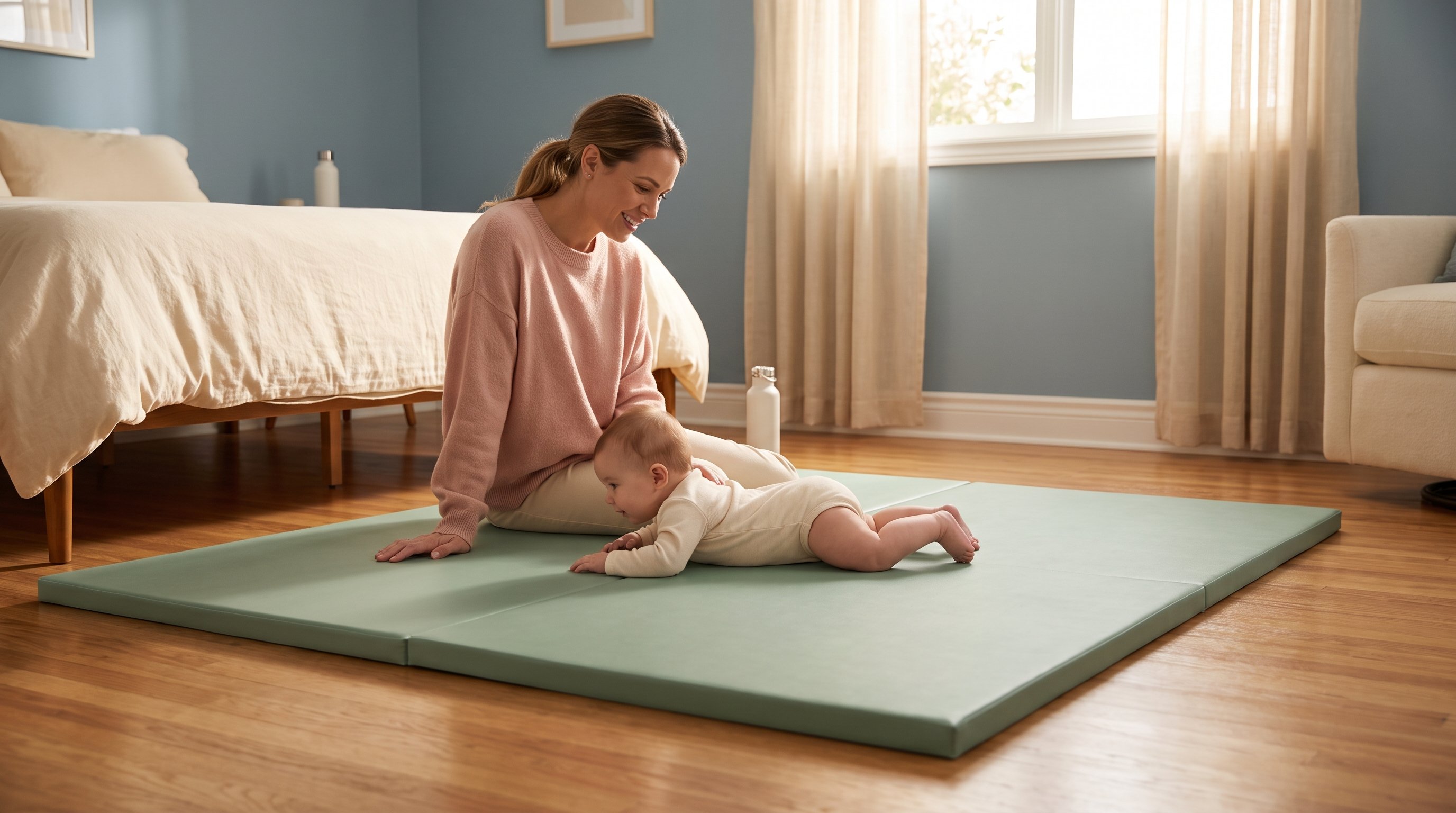
A soft sofa cushion or thick bedding makes it harder to push and twist. A firm mat on the floor gives the baby something solid to work against.
Physically Rolling the Baby to 'show Them How'
Moving a baby's body through the motion doesn't teach the muscles anything. Letting them attempt it themselves, even if it looks clumsy, is what builds the strength.
Comparing Against One Date on a Chart
Charts give a range, not a deadline, and plenty of babies roll earlier or later within that range without anything being off. Watching for steady progress matters more than matching a specific week.
Recording the Rolling Milestone With Welcome Baby
The first roll tends to happen fast and without warning - on a mat, mid-nappy-change, or during a quiet afternoon on the floor. It's easy to remember the moment and forget the details within a week.
Welcome Baby is built around this kind of thing - customized content and guided memory pages designed to capture the small, fast-moving milestones of a baby's first chapter, not just the big ones. It gives the moment a proper place to live, with prompts that help you note what happened and how it felt, rather than relying on memory alone months later.

Prepare For Your Baby
Your Baby Plan
Keeping This Stage in Focus Without the Pressure
Rolling over is one of those milestones that arrives quietly and then is suddenly everywhere - across the cot, down the hallway, off the changing mat. Giving a baby regular floor time and letting the pace be theirs is the whole job.
Writing it down somewhere, whether that's a quick note or a page in Welcome Baby, means the detail survives longer than the week it happened in.
FAQ
Rolling timing varies a lot, and a baby who's gaining strength and moving more each week, even without a full roll, is generally progressing fine. If a parent has concerns, a check-in with a health visitor or GP is the right next step rather than guessing from an app or chart.
Tummy time builds the strength rolling depends on, but it doesn't guarantee a specific date. Some babies roll early with modest tummy time, others take longer even with plenty of practice, because individual pace plays a real part.
Once a baby can roll one way, they can roll at an unexpected moment, so raised surfaces become less safe even briefly. A firm mat on the floor is a steadier choice once rolling starts.
Most parents mean to remember and then can't pin down the exact week a few months later. Writing it down close to the moment, such as in a Welcome Baby memory page, keeps the detail accurate instead of relying on guesswork later.
Share this post