When Do Babies Start Walking? A Month-By-Month Reality Check
By:Author:Welcome Baby Editorial
Updated on:October 20, 2026
- Does Encouraging Walking Actually Speed It Up?
- Waiting It Out or Actively Supporting Early Steps
- Why Open Floor Time Beats Structured Walking Drills
- Adjusting Expectations for Different Babies and Stages
- Fitting First Steps Into an Already Busy Week
- The Myth That Earlier Walking Means Ahead of the Game
- Keeping the Walking Milestone With Welcome Baby
- What to Actually Watch for in the Coming Months
Most babies take their first independent steps somewhere between 9 and 18 months, with many landing around the 12-month mark. That is a wide window, and it is wide on purpose - walking depends on leg strength, balance and confidence all lining up at once, and each baby builds those pieces at a different pace.
The mechanism is simple even if the timing isn't: a baby has to be able to bear weight, balance on two feet without support, and feel steady enough to let go of something solid. Those three things usually show up in stages, not all at once, which is why walking looks like a process rather than a single event.
This article covers what the lead-up to walking usually looks like, how to think about the range of normal, what actually helps versus what doesn't, and how to hold onto the memory once those first wobbly steps happen.
Does Encouraging Walking Actually Speed It Up?
Encouragement helps a baby practise, but it does not override the physical readiness a baby needs before walking becomes possible. The muscles in the legs, hips and trunk need enough strength to hold a baby upright, and that strength gets built through the stages that come before walking - sitting, crawling, pulling to stand, cruising along furniture.
Here's the arithmetic that makes this easier to picture: if a baby spends even a few minutes several times a day pulling up and cruising, that adds up to meaningful practice time across a week without needing one long dedicated session.
Giving a baby the chance to practise - open floor space, furniture at the right height, bare feet for grip - supports the process. It doesn't force a timeline, and no amount of encouragement makes a baby walk before the body is ready.
Waiting It Out or Actively Supporting Early Steps
Parents tend to land in one of two camps: let it happen on its own, or actively set up chances to practise standing and cruising. Both can work, but they come with different trade-offs worth weighing honestly.
| Approach | Effort Needed | Likely Result |
|---|---|---|
| Waiting it out | Very low | Steps appear on baby's own timeline |
| Furniture cruising setup | Low | More practice chances, steady pace |
| Floor space and bare feet | Low | Better balance and grip practice |
| Holding hands to walk | Moderate | Confidence boost, limited independent balance |
| Baby walkers or similar props | Low | Mixed value for building real balance |
There's no wrong choice here. The difference is mostly about how much structure a family wants to build into the day, not about one method being faster than another.
Why Open Floor Time Beats Structured Walking Drills
Scheduled 'walking practice' sounds thorough, but it's hard to keep up and babies don't actually need it to be formal. Open floor time with safe furniture nearby gets repeated far more easily, simply because it fits into whatever the day already looks like.
A baby who gets a few short stretches of floor time scattered through the day - after a nap, before dinner, during a sibling's playtime - ends up with more total practice than one who only gets a single long structured session that's easy to skip when the day gets busy.
Consistency is unglamorous and it wins anyway. The families who find walking practice easiest are usually the ones who stopped treating it as a task and just left the floor open.
Adjusting Expectations for Different Babies and Stages
The Baby Who Crawled Late
A baby who was slower to crawl often takes a bit longer to walk too, since the muscle groups overlap. That's not a setback - it's just a knock-on effect of one stage building on another.
The Baby Who Skipped Crawling
Some babies go straight from sitting to cruising to walking without much traditional crawling in between. That's within the range of normal and doesn't need a separate explanation.
The Second or Third Baby
Babies with older siblings to watch sometimes pick up cues earlier simply from seeing walking modelled constantly at their eye level. It's not guaranteed, but it's a common pattern parents notice.
The Baby Who Cruises for Months
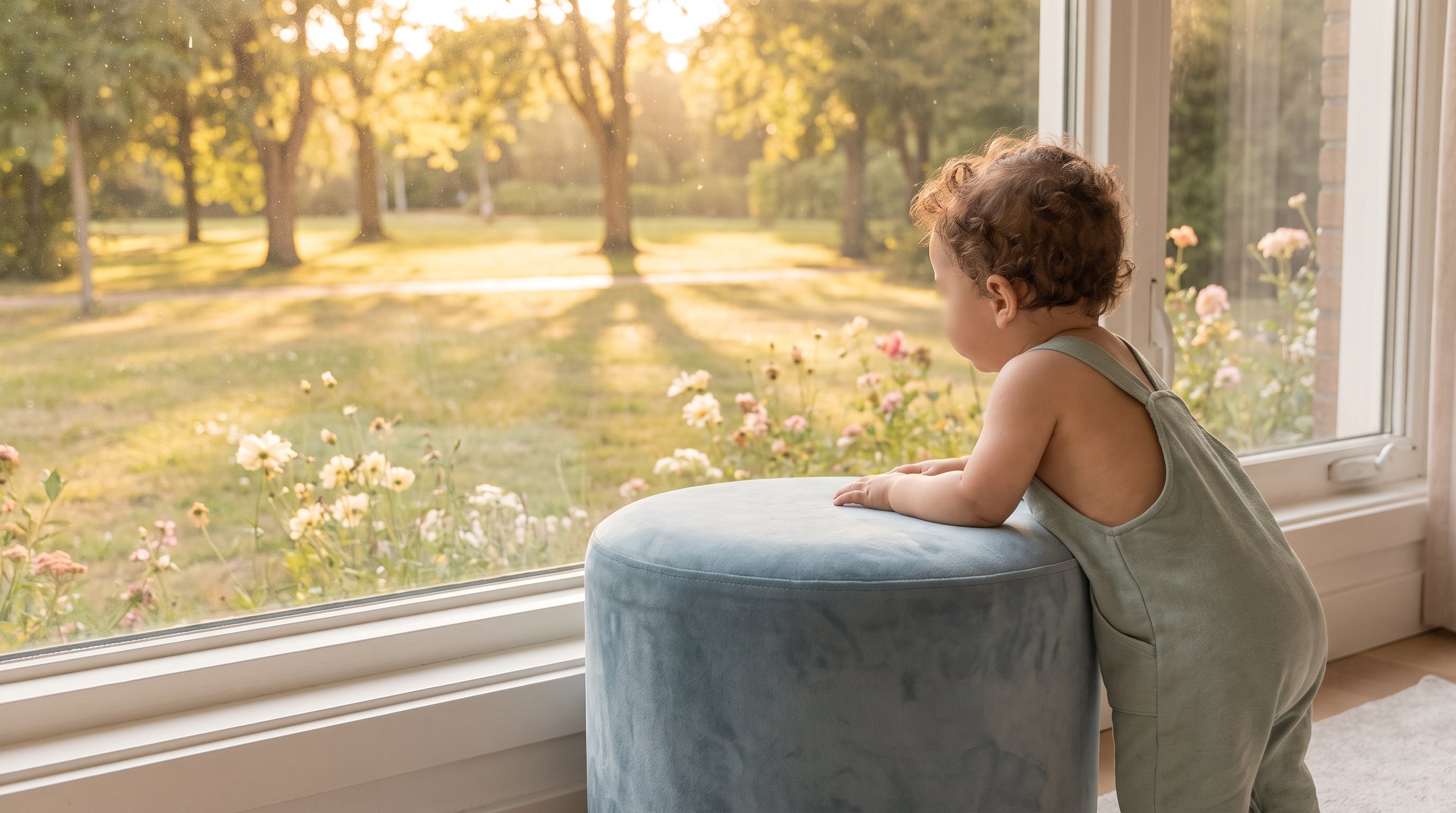
Some babies cruise along furniture for a long stretch before ever letting go. That extended cruising phase is often just extra balance-building, not a sign anything is off track.
Fitting First Steps Into an Already Busy Week
Real days are full - work, feeds, naps, other kids - so the goal isn't to add a new task but to notice the movement that's already happening around the house.
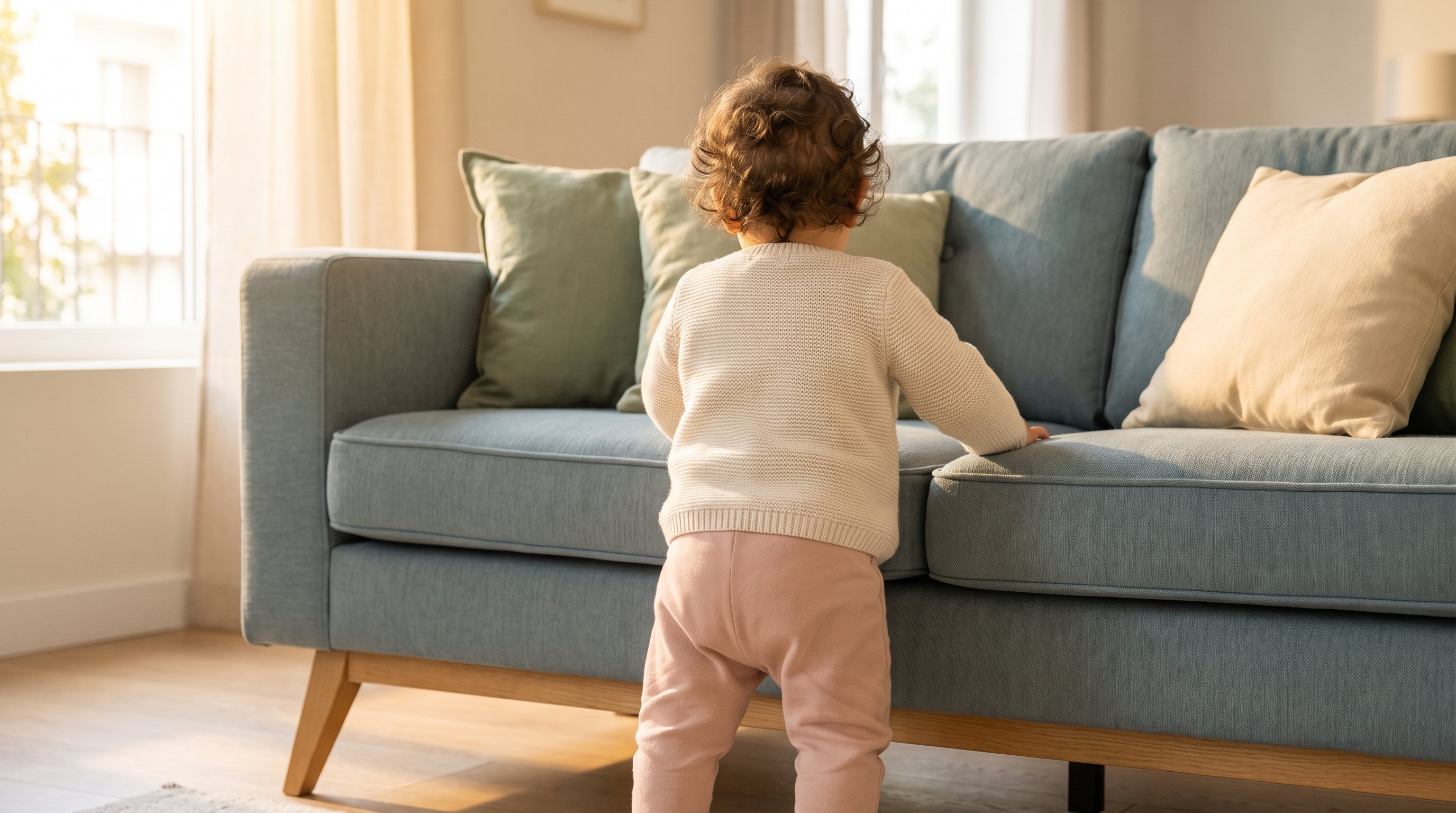
Leaving a clear stretch of floor by the sofa, letting bath time end with a few minutes of standing practice, or just narrating what the baby is doing while they cruise - none of it needs scheduling.
This is also where a lot of parents start thinking about how to hold onto the memory, not just support the milestone. Welcome Baby's guided memory pages give that moment somewhere to live, with space built specifically for capturing first steps rather than trying to remember the date months later.
The Myth That Earlier Walking Means Ahead of the Game
An early walker isn't a sign of being advanced, and a later one isn't behind. Walking age sits on a wide, normal range, and there's no meaningful link between when a baby takes their first step and how they develop afterward.
The idea that parents can push a baby into walking sooner through gear, drills or comparison with other babies doesn't hold up against how the body actually builds this skill - strength and balance develop at their own pace, not on a schedule set by effort alone.
The honest answer is that walking shows up when a baby's body is ready for it, somewhere inside that 9-to-18-month range, and the most useful thing a parent can do is support the practice and let the timing be what it is.
Keeping the Walking Milestone With Welcome Baby
First steps happen fast and usually when nobody has a camera ready, which is exactly why having a place to record the details matters as much as the moment itself.
Welcome Baby is built around guided memory pages designed for exactly this kind of milestone - space to note the date, where it happened, who was there, and the small details that fade from memory within a few weeks. It's a book meant to be filled slowly, growing more meaningful the longer a family uses it rather than something to rush through in one sitting.
Prepare For Your Baby
Your Baby Plan
What to Actually Watch for in the Coming Months
The clearest sign walking is close isn't a date on a calendar - it's a baby standing unsupported for a few seconds, cruising confidently along furniture, or taking a step or two between two people's hands.
Welcome Baby works well here not because it changes the timeline, but because it gives the lead-up somewhere to live - the wobbly standing, the first let-go, the day the steps finally stick - all recorded as it happens rather than reconstructed later from memory.
FAQ
Most babies take their first independent steps somewhere between 9 and 18 months, with many around 12 months. There's no single 'correct' age within that range.
Not walking by 12 months is common and still within the normal range, since the full window extends to 18 months. If a baby isn't showing interest in standing or cruising by then, it's worth a conversation with whoever handles their checkups.
Walkers and similar props give support rather than practice at true independent balance, so their value for speeding up walking is mixed. Open floor space and furniture cruising tend to build the same muscles more directly.
Writing it down the same day is the only reliable way, since exact dates blur fast once life moves on. Welcome Baby's guided memory pages are built for this, giving first steps a dedicated place to be recorded properly rather than left to memory.
Share this post