When to Start Reading to Baby: A No-Pressure Starting Point
By:Author:Welcome Baby Editorial
Updated on:October 20, 2026
- Getting Started With Reading to Baby This Week
- How Much Reading Time a Baby Actually Needs
- Fitting Baby Reading Into an Already Full Day
- A Four-Stage Plan for Building the Reading Habit
- What Changes Between the Early Weeks and the First Year
- Mistakes That Turn Reading Time Into a Chore
- Keeping Baby's Reading Milestones With Welcome Baby
- Starting the Reading Habit Tonight
There's no wrong age to start reading to a baby - you can begin on day one, and there's no deadline you're racing against. A newborn can't follow a plot, but they can hear your voice, notice rhythm and pick up on the fact that this quiet moment with you happens again and again.
The mechanism is simple: babies learn language by hearing it a lot, in context, from people they trust. Reading aloud is just a reliable way to get more of that talk into the day, wrapped around pictures and a bit of cuddle time.
This article covers how to start, how often it actually needs to happen, a simple four-stage plan, what changes over the months, and the mistakes that make the habit fall apart.
Getting Started With Reading to Baby This Week
You don't need a reading corner or a stack of new books to begin. A handful of small, repeatable steps gets the habit moving right away.
Steps to Start This Week
- Pick one board book - something with thick pages and high-contrast pictures works for the newest babies.
- Choose a fixed moment - after a feed or before a nap, so the habit attaches to something already happening.
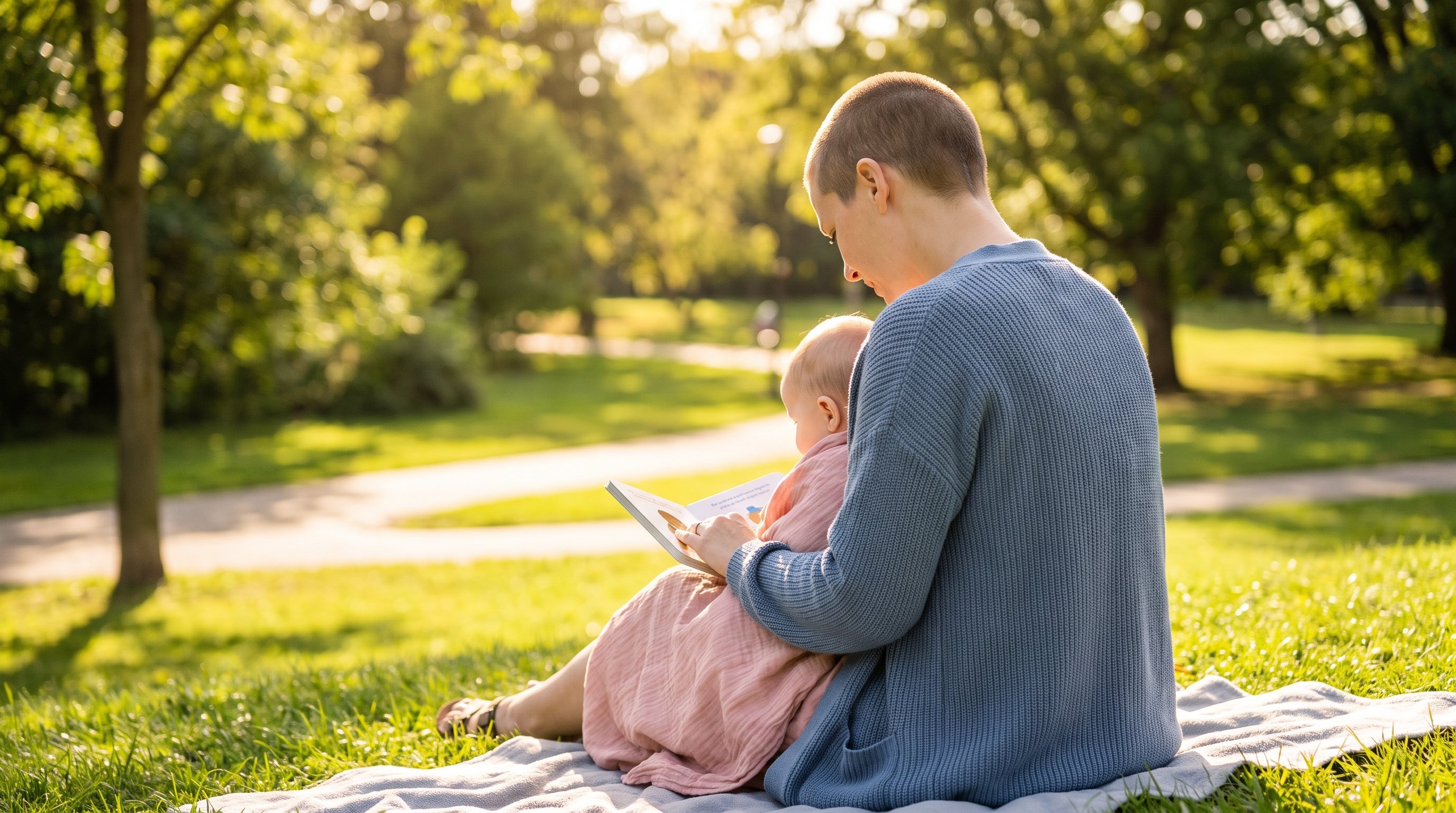
- Hold baby facing the pages or your face - either works, since voice and eye contact matter more than the words.
- Read in whatever tone feels natural - slow, sing-song, narrating the pictures, all of it counts.
- Let baby mouth or grab the book - this is normal interaction at this age, not a distraction from reading.
- Stop when baby turns away or fusses - a short session that ends calmly beats a long one that ends in tears.
- Repeat the same book for days - repetition is what makes the words and rhythm familiar.
How Much Reading Time a Baby Actually Needs
There's no minimum that has to be hit, but a short daily touchpoint is easier to sustain than one long weekly session.
What a Realistic Amount Looks Like
A few minutes, once or twice a day, is plenty for the earliest months - the goal is consistency, not duration.
| Age | Session Length | Frequency |
|---|---|---|
| Newborn | 1-3 minutes | Once daily |
| 3-6 months | 3-5 minutes | Once or twice daily |
| 6-12 months | 5-10 minutes | Twice daily |
| 12+ months | 10-15 minutes | Twice daily or more |
Treat these as a starting shape, not a target to chase - a fussy evening that skips the book entirely doesn't undo the habit.
Fitting Baby Reading Into an Already Full Day
Most days already have a few quiet pauses built in - after a bottle, in the car seat before you head inside, in the minutes before lights out.
Attaching reading to one of those existing pauses means you're not finding new time, just filling time that's already there.
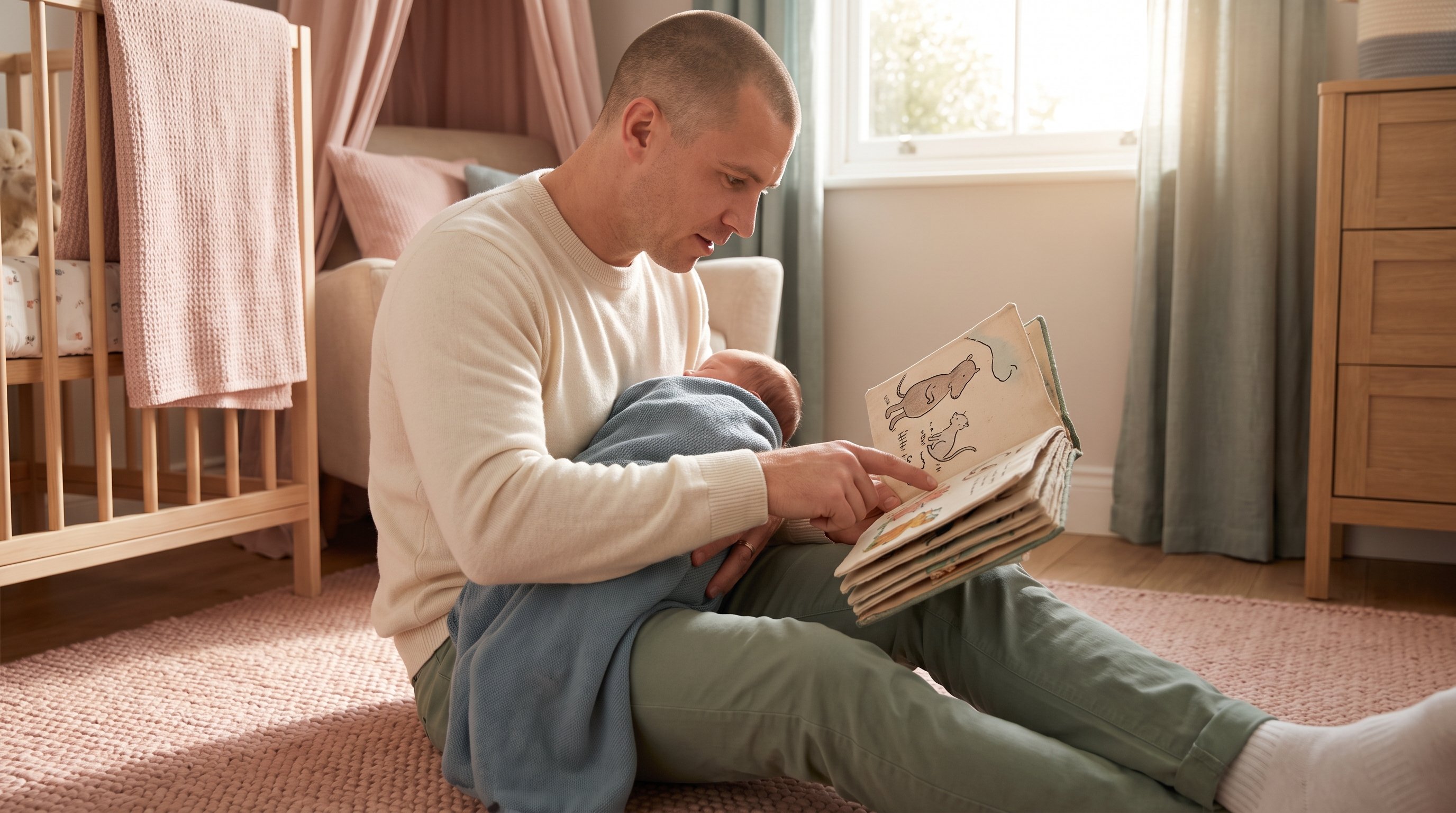
Some parents like to jot down which books got a reaction and when the habit started - a guided memory book can give that a place to live alongside the rest of baby's early days.
Welcome Baby includes space built for exactly that kind of early-days record, so the reading habit doesn't just happen and disappear - it gets kept.
A Four-Stage Plan for Building the Reading Habit
Rather than a week-by-week countdown, this works better as stages that move at baby's pace.
| Stage | What Changes |
|---|---|
| Stage 1 | One short book, one fixed time |
| Stage 2 | Add a second session, same book repeated |
| Stage 3 | Rotate in two or three books |
| Stage 4 | Let baby choose or point at pages |
The order matters more than the exact pace - fixed timing first, then repetition, then variety, then handing some control to baby.
What Changes Between the Early Weeks and the First Year
In the early weeks, reading mostly looks like talking with a book as a prop - baby is watching your face more than the page.
Somewhere around the middle of the first year, attention to pictures tends to grow, and baby may start reaching for the book or patting the pages.
By the end of the first year, some babies will sit for a full short book, while others still prefer a page or two before moving on - both are within the normal range.
It's worth being vague about exact timing here, because the pace this unfolds at varies a lot between babies, and none of it is a race against another baby's pace.
Mistakes That Turn Reading Time Into a Chore
Treating It As a Performance
Trying to read every page perfectly with no interruptions sets up frustration for both of you - narrating the pictures or skipping ahead is still reading time.
Switching Books Too Often
New books every day sound fun but give baby nothing to recognise - sticking with one or two for a stretch builds familiarity faster.

Pushing Through a Fussy Moment
Reading into a meltdown teaches baby to dread the book - stopping early and trying again later keeps the association positive.
Waiting for a 'right Age' to Begin
There's no age where reading suddenly starts mattering - starting now, even briefly, is the only requirement.
Comparing Attention Span to Other Babies
Some babies sit still for ten pages, others want one - matching the session to baby's actual mood works better than a fixed rule.
Keeping Baby's Reading Milestones With Welcome Baby
A reading habit is made up of small, easy-to-forget moments - the first time baby patted a page, the book that always got a laugh, the night the story actually worked as a wind-down.
Generic baby books often leave a single blank page for 'early reading', which doesn't leave much room for the specifics that actually make the memory worth revisiting later.
Welcome Baby is built differently - it's a customized baby book with guided memory pages created around your baby and family, so these small reading moments get a proper place instead of getting lost in a phone camera roll.
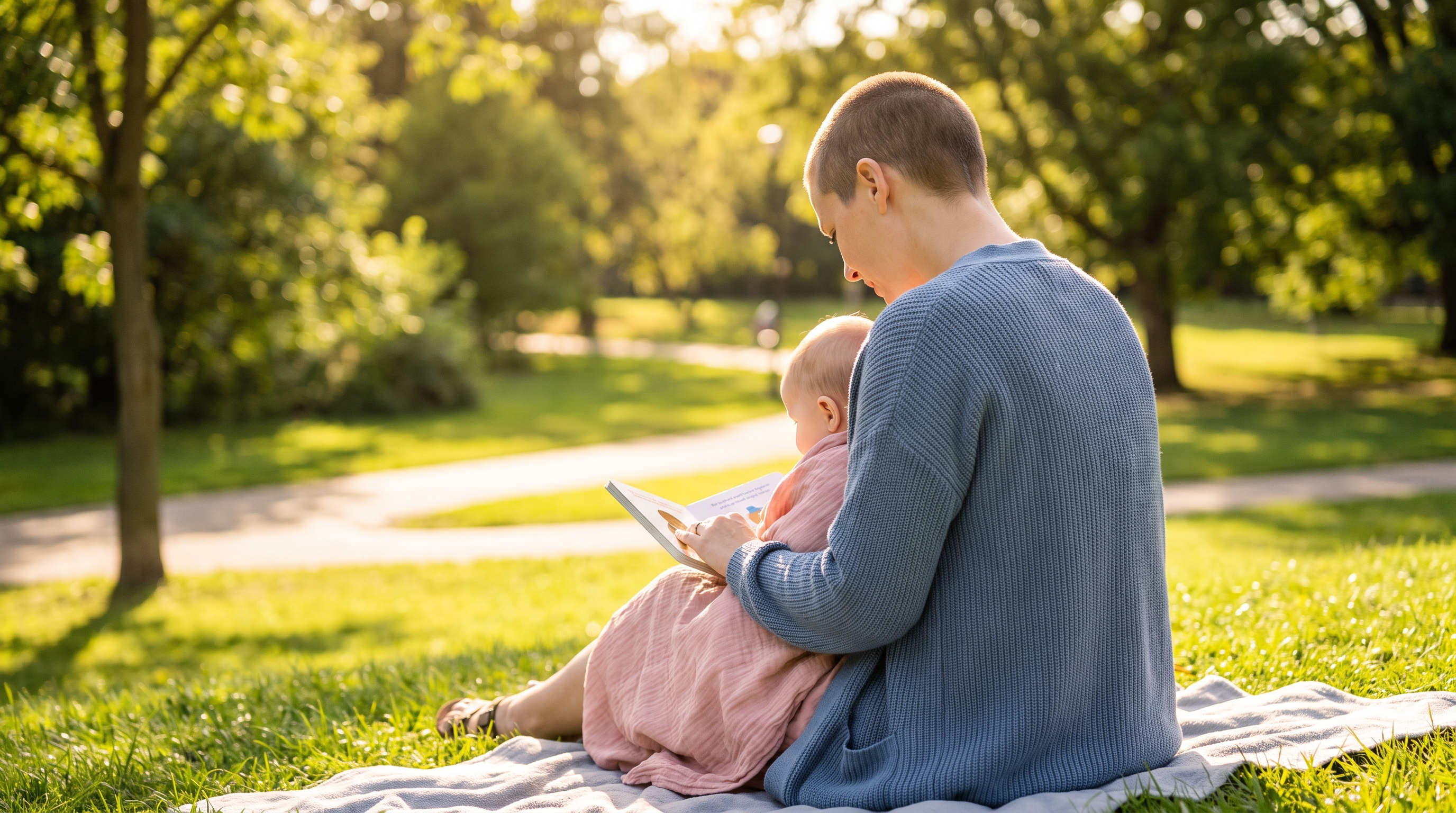
Prepare For Your Baby
Your Baby Plan
Starting the Reading Habit Tonight
The honest answer to when to start reading to baby is simple: tonight, with whatever book is nearest, for however long baby stays interested.
If keeping a record of this stage matters to you, Welcome Baby gives the habit a place to grow alongside everything else from baby's first chapter.
FAQ
No - newborns can hear and respond to voice and rhythm from the start, even though they can't follow a story. Reading aloud at this stage is really about voice and closeness, not comprehension.
Board books with sturdy pages and simple pictures suit the earliest months best, since babies will chew and grab at them. As attention grows, books with more pictures per page tend to hold interest longer.
Short sessions and lots of movement are normal at this age, so a few pages while baby wriggles still counts. Welcome Baby's guided pages give you somewhere to note even these brief, imperfect moments so the habit still gets recorded.
No single day makes or breaks the habit, so a missed evening isn't a setback. What matters more is that reading comes back around regularly, not that it's unbroken.
Share this post