Hospital Bag Checklist: What to Pack and When
By:Author:Welcome Baby Editorial
Updated on:October 20, 2026
- The Myth That You Need to Pack for Every Scenario
- How a Packing List Actually Breaks Down
- What Changes How Useful Your Packing List Is
- A Sample Hospital Bag Checklist by Category
- Fitting Hospital Bag Prep Into a Busy Final Trimester
- When to Actually Pack the Hospital Bag
- Common Mistakes That Make Hospital Bag Packing Harder
- Turning Hospital Bag Prep Into the First Page of the Story
- Getting the Bag by the Door This Week
A packing list works best when it's short enough to actually finish, not a list of fifty things you'll never use. Pack for comfort during labour, basics for a short stay, and a going-home outfit for the baby - that covers almost everything.
The reason most bags end up overstuffed is simple: lists get copied from one source to the next without anyone checking what actually gets used during a typical stay. Most births involve a stay of a day or two, not a week, so the bag doesn't need to hold a week's worth of anything.
This guide covers what the bag actually needs to do, a packing list split by who it's for, a sample week for getting it done, and the mistakes that leave people borrowing a phone charger from a stranger at 3am.
The Myth That You Need to Pack for Every Scenario
There's a version of the packing list that tries to cover every possible outcome - a different outfit for every mood, three types of snacks, a full skincare routine. That's not necessary, and it makes the bag heavier and harder to search through when you're tired.
A hospital stay is short and the hospital itself supplies more than people expect: gowns, basic toiletries in some cases, nappies and wipes for the first day or two. The bag's job is to fill the gaps, not replace what's already provided.
The honest answer is that a smaller, well-chosen bag beats a large one every time, because you can find things in it without unpacking the whole thing onto a hospital chair.
How a Packing List Actually Breaks Down
A hospital bag checklist isn't one list - it's three, and treating it that way makes packing faster and less stressful.
Packing for Labour Itself
This part covers comfort during the hours before birth: something to wear that you don't mind getting messy, lip balm, hair ties, a phone charger with a long cable, and snacks for whoever is with you. None of this needs to be fancy - it just needs to be within reach.
Packing for the Stay After
This part covers the day or two afterward: your own toiletries, a dark loose-fitting outfit to wear home, nursing-friendly tops if you're planning to breastfeed, and basics for the baby like a going-home outfit and a blanket. Keep this part separate from the labour bag so you're not digging through snack wrappers to find a toothbrush.
What Changes How Useful Your Packing List Is
A few decisions matter more than the rest in terms of whether the bag actually helps in the moment.
Three Things That Make the Biggest Difference
- Packing it before the final weeks - leaving it until the last minute means packing under pressure, which is when things get forgotten.
- Separating the bag into labour, stay and baby sections - a bag with everything loose together is slow to search when someone is tired or in pain.
- Keeping the list short - a bag with fewer, well-chosen items gets used properly; one stuffed with extras often sits half-unpacked.
A Sample Hospital Bag Checklist by Category
Here's a sample split that covers the three areas without overloading any of them.
| Category | What to pack |
|---|---|
| For labour | Comfortable outfit, phone charger, snacks |
| For your stay | Toiletries, going-home outfit, nursing tops |
| For the baby | Going-home outfit, blanket, car seat |
| For support person | Change of clothes, snacks, charger |
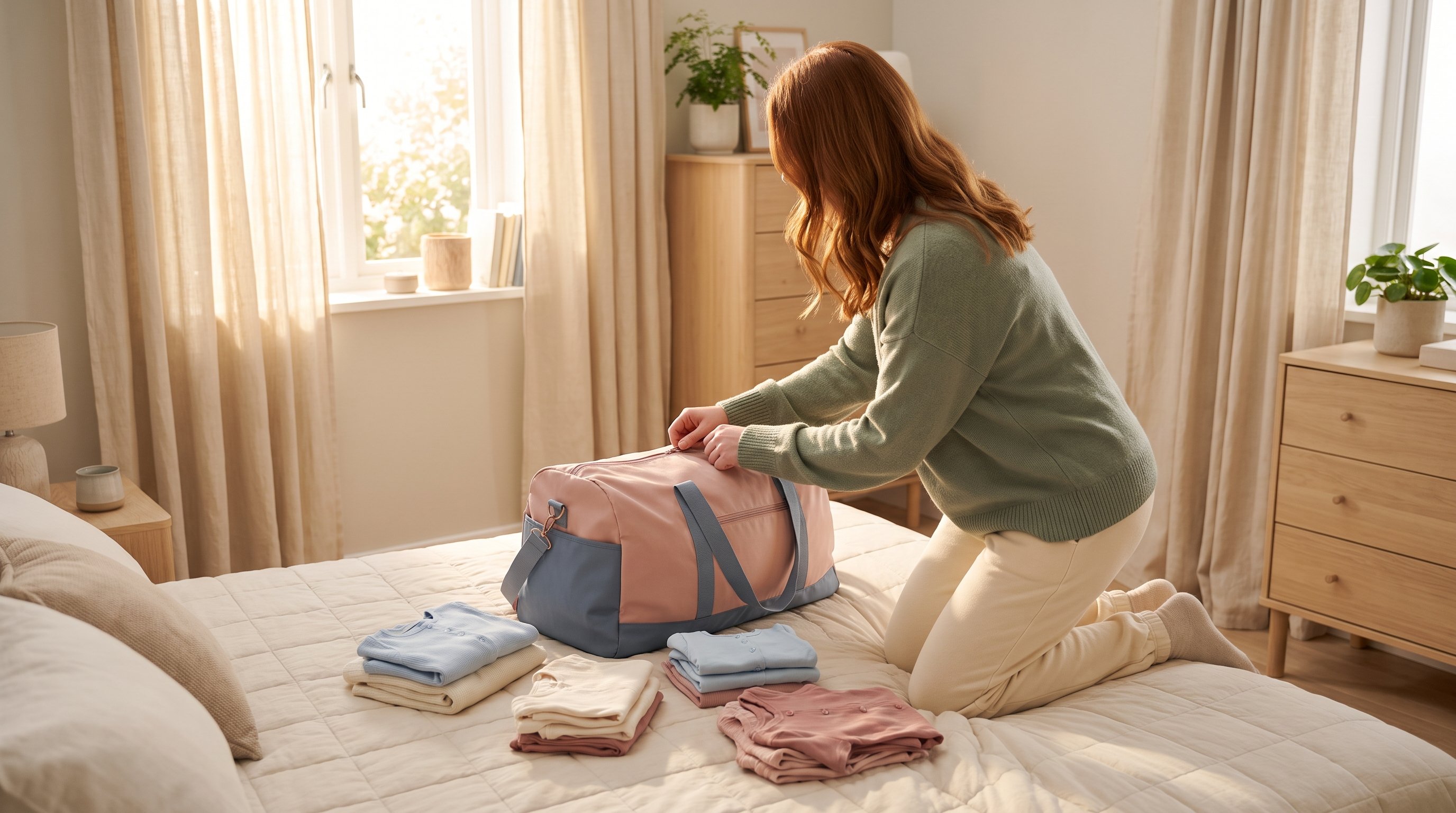
This isn't an exhaustive list - it's a starting point you can adjust based on what the hospital already provides and what you personally can't do without.
Fitting Hospital Bag Prep Into a Busy Final Trimester
The final weeks of pregnancy are already full of appointments, admin and waiting, so packing a hospital bag often gets pushed down the list. Breaking it into the three categories above means you can pack one section at a time over a few evenings instead of doing it all at once.
Keeping a running note of what's going in the bag - and what you still need to buy - helps you avoid last-minute shopping trips. This is the kind of small, practical task that fits naturally alongside other preparations, including the space in Welcome Baby where early notes and plans can live before the baby arrives.
A short packing list kept somewhere you'll actually look at it beats a mental list you're trying to hold onto through sleepless nights.
When to Actually Pack the Hospital Bag
There's no single correct week to pack a hospital bag, because every pregnancy and every plan is different. What matters more is having it ready before the point where last-minute packing becomes stressful rather than simple.
Some people like the bag fully packed well ahead of the due date; others prefer to pack the stay and baby sections early and leave the labour bag's perishables, like snacks, for closer to the time. Either approach works, as long as the bag isn't something you're assembling while contractions are already underway.
Common Mistakes That Make Hospital Bag Packing Harder
Packing One Giant Bag Instead of Three Sections
A single bag with everything mixed together is slow to search through. Splitting labour, stay and baby items into separate bags or clear sections fixes this quickly.
Forgetting the Phone Charger Has to Reach the Bed
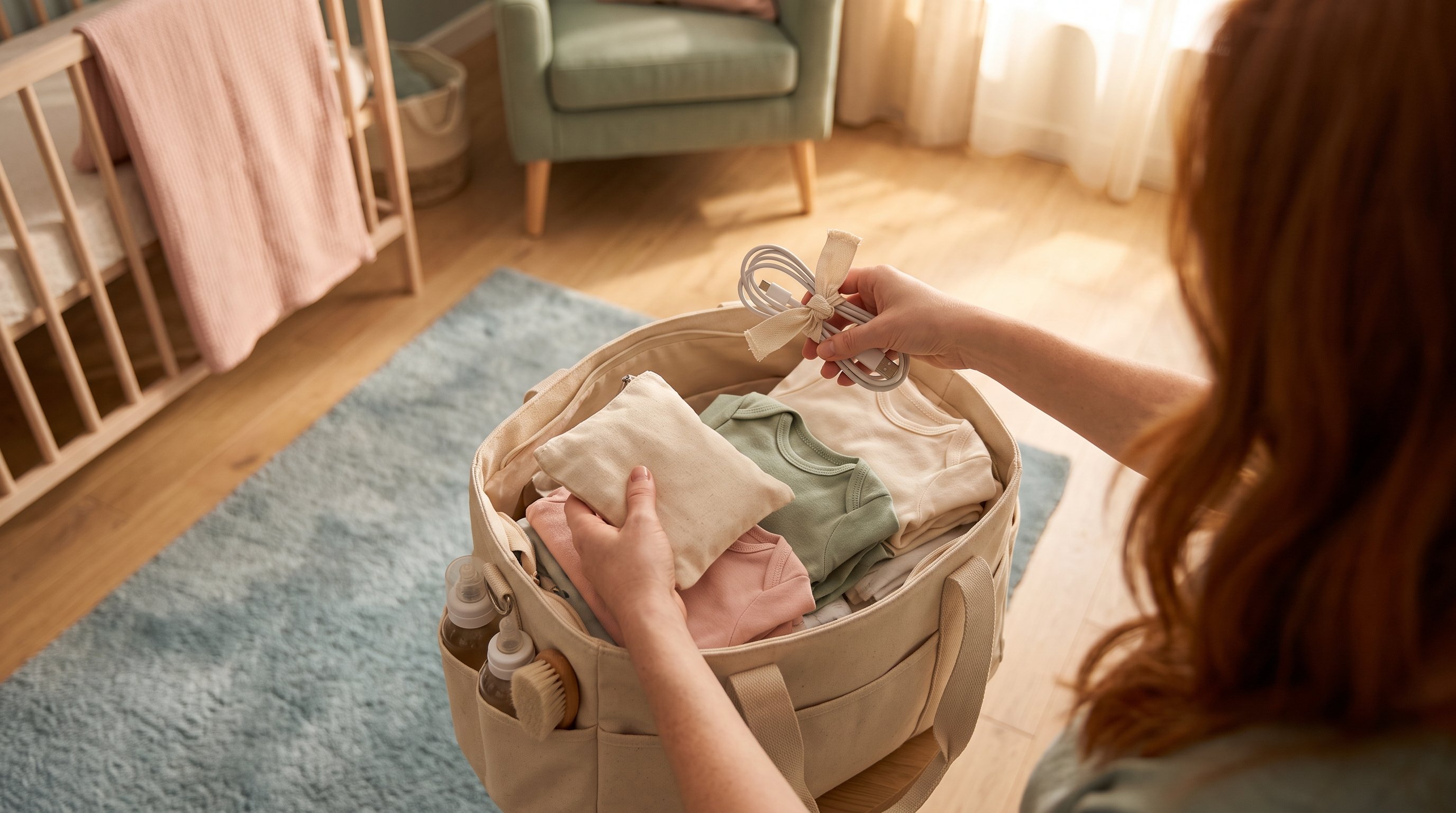
A short charging cable is one of the most commonly missed items. Pack one that's at least a couple of metres long, or bring a spare.
Overpacking Baby Clothes in One Size
Babies vary in size at birth, so one going-home outfit in a single size can end up too small or too large. Packing two sizes solves this without adding much bulk.
Leaving the Car Seat Out of the Plan
A car seat isn't something to pack in the bag, but it does need to be ready and correctly fitted before the due date approaches. Treat it as part of the hospital bag checklist even though it travels separately.
Packing It Too Late to Check Anything Twice
Packing everything in one rushed session means there's no chance to notice what's missing. Packing a section at a time over several days gives you the chance to add things you forgot.
Turning Hospital Bag Prep Into the First Page of the Story
Packing a hospital bag is one of the last practical jobs before everything changes, and it's also one of the first moments that belongs in your baby's story. Welcome Baby gives that moment a home, with guided memory pages built for exactly this stretch of time - the days right before and after your baby arrives.
Instead of a generic baby book that assumes every family's timeline looks the same, Welcome Baby is customized to reflect the moments that matter to your family specifically, starting with the dedicated focus on your baby's first chapter. The gentle prompts and articles built into it mean you're not staring at a blank page wondering what to write about the week you packed that bag.
Prepare For Your Baby
Your Baby Plan
Getting the Bag by the Door This Week
A packing list doesn't need to be complicated to work - it needs to be split into clear sections, packed a little at a time, and ready before you need it. Pick one category from this list and pack it tonight, then do the next one tomorrow.
Once the bag is by the door, that small sense of readiness is worth noting somewhere, and Welcome Baby is a simple place to keep that moment alongside everything that follows it.
FAQ
The essentials are comfort items for labour, basic toiletries and a going-home outfit for your stay, and a going-home outfit plus a correctly fitted car seat for the baby. Everything beyond that is a personal extra, not a requirement.
Overpacking makes the bag harder to search through and heavier to carry, without actually adding usefulness. A short, well-organised list covers the real gaps the hospital doesn't fill, which does the job better than extra volume.
Most hospitals can supply basics like gowns and some nappies for the first day, so an unpacked bag isn't a crisis. It's still worth packing early precisely so this situation doesn't come up.
Pick one spot to keep notes, photos and small memories from this stretch of time so you're not relying on memory alone. Welcome Baby's guided pages are built for exactly this period, so the hospital bag, the final weeks and the first days have one place to live.
Share this post