How Often to Bathe Newborn: A Schedule New Parents Can Trust
By:Author:Welcome Baby Editorial
Updated on:October 20, 2026
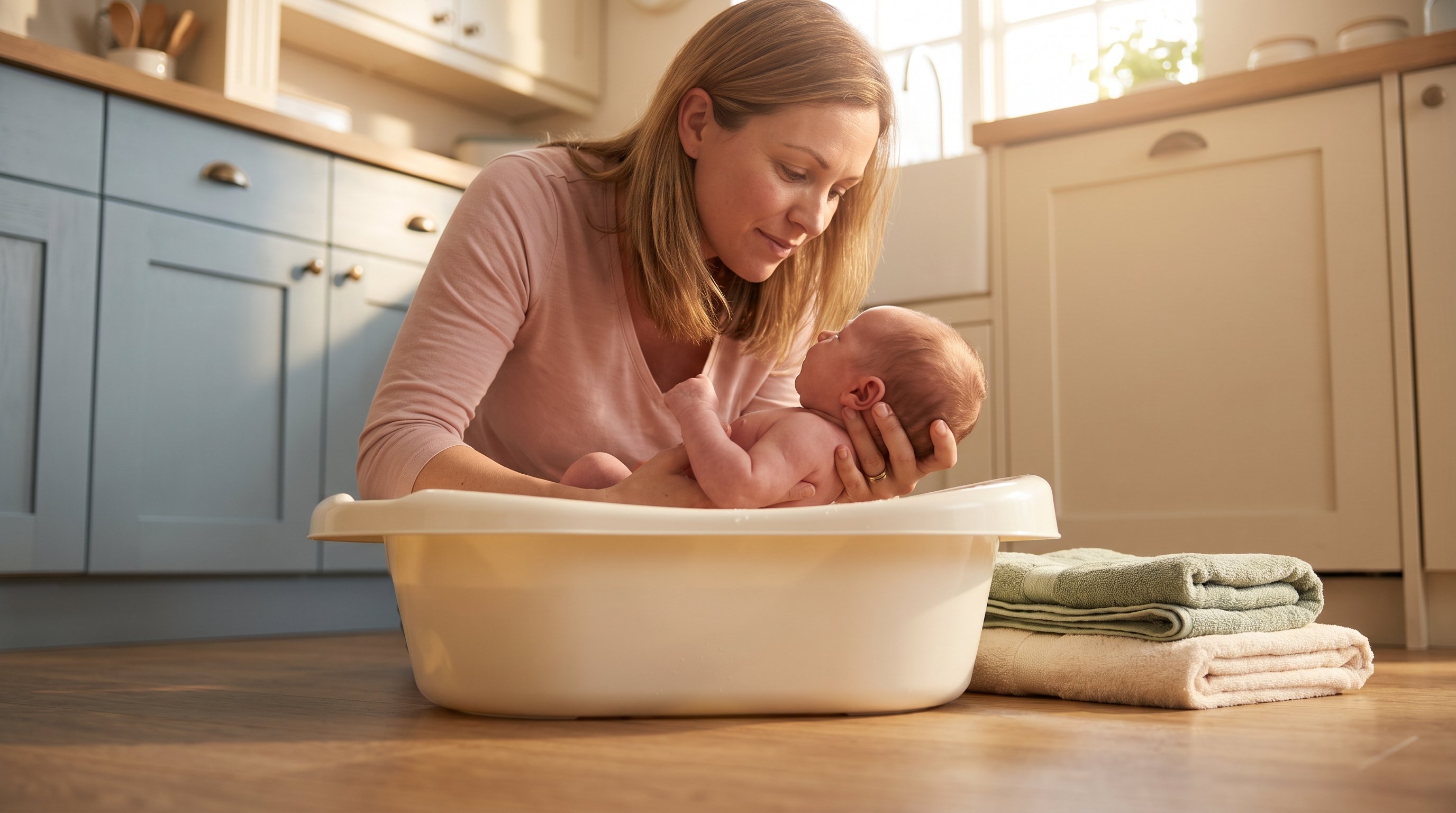
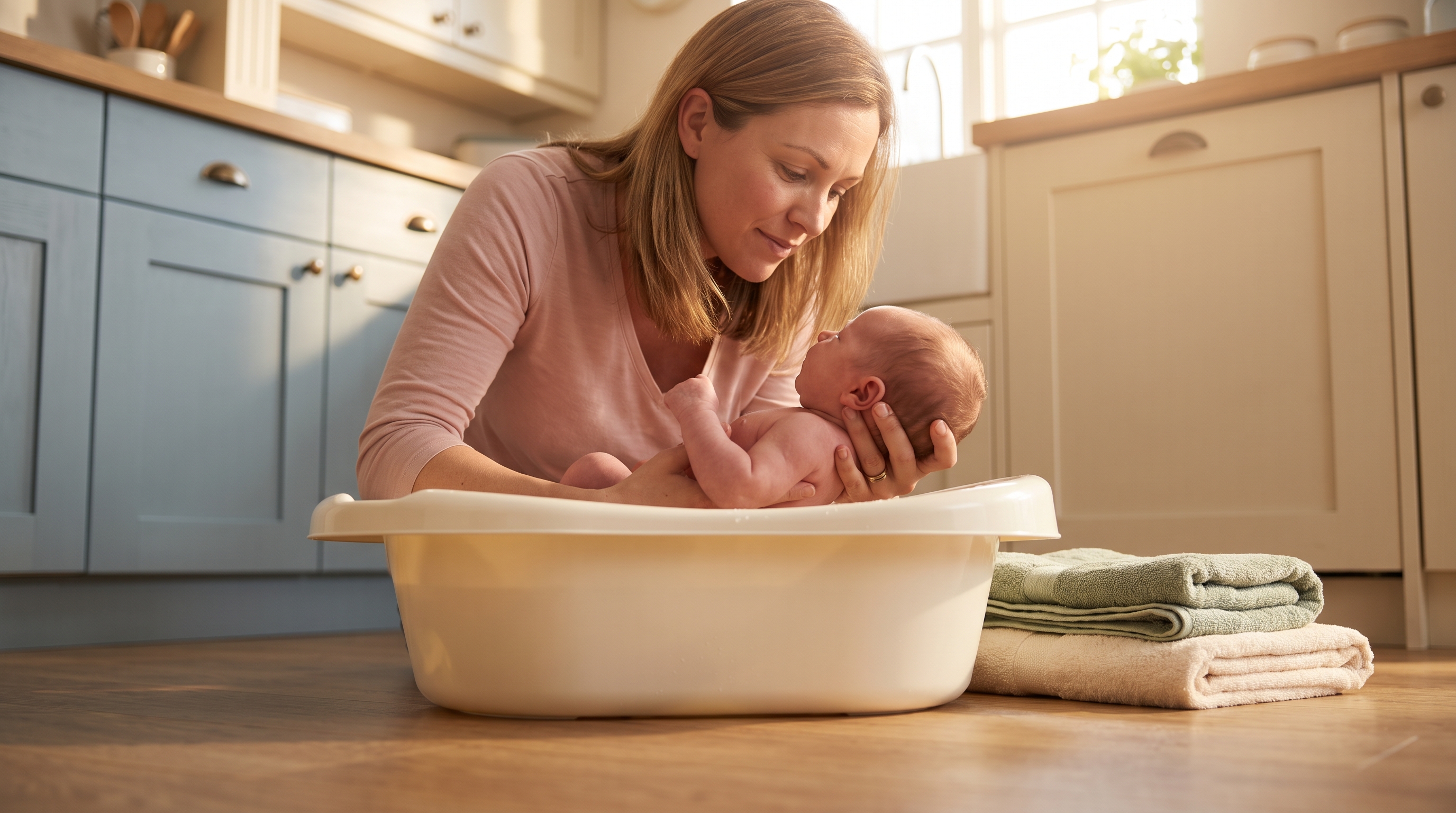
- What a Realistic Newborn Bathing Week Looks Like
- How Many Baths a Newborn Actually Needs Each Week
- Why a Simple Wipe-Down Beats a Daily Bath
- Fitting Bath Time Into Already Exhausted Evenings
- Adjusting the Bath Routine for Different Family Situations
- What Changes in the Months After the Newborn Stage
- Keeping Bath Time Notes With a Memory Journal
- Settling Into a Bathing Rhythm That Actually Sticks
A newborn needs a bath about two to three times a week, not every day. Skin this new does not get dirty fast enough to need daily washing, and too much water can leave it dry.
The reason is simple: newborn skin is thinner and loses moisture faster than older skin, so frequent soaking strips away the natural oils that keep it protected.
This article covers what a realistic bathing week looks like, how much is actually needed, why a simple routine beats a complicated one, and how to fit it into days that already feel full.
What a Realistic Newborn Bathing Week Looks Like
A newborn bathing week does not need to be elaborate. Here is one simple pattern you can copy and adjust to your own days.
A Sample Week
- Monday - quick sponge wipe of face, neck folds and hands after a messy feed
- Tuesday - full bath in the evening before the last feed of the night
- Wednesday - sponge wipe only, no full bath needed
- Thursday - sponge wipe of nappy area and creases
- Friday - full bath, same time as Tuesday to keep a rhythm
- Weekend - one more full bath if skin looks fine, otherwise skip and wipe instead
That pattern lands at two to three full baths a week, with sponge wipes filling the gaps on the other days.
How Many Baths a Newborn Actually Needs Each Week
The Weekly Number That Works for Most Newborns
Two to three full baths a week is the range most new parents settle into, with sponge cleaning on the days in between for the face, neck, hands and nappy area.

| Age | Full Baths | Notes |
|---|---|---|
| First week | 2 to 3 per week | Sponge wipe until cord stump falls off |
| 2 to 4 weeks | 2 to 3 per week | Full tub bath once cord area is healed |
| 1 to 3 months | 2 to 4 per week | Can increase slightly as baby gets messier |
| After 3 months | 3 to 4 per week | More mobile babies may need extra wipes |
These are starting points, not rules - some newborns are happy with fewer baths, and that is perfectly fine.
Why a Simple Wipe-Down Beats a Daily Bath
Daily bathing sounds thorough, but it is harder to keep up and harder on newborn skin than a simple wipe-down routine.
A full bath every day means more handling, more time, and more chances for skin to dry out between washes.
A sponge wipe on the face, neck folds and nappy area takes a couple of minutes and covers the spots that actually get dirty between full baths.

The wipe-down routine wins because it is something tired parents can actually keep doing, night after night, without dreading it.
Fitting Bath Time Into Already Exhausted Evenings
Bath time does not need its own hour of the day - it can slot into whatever routine already exists around feeding and sleep.
Picking the same two or three evenings each week, right before the last feed, turns bath time into a cue that signals sleep is coming rather than another task on the list.
Writing down which evenings worked and which ones felt rushed is worth doing somewhere you will actually look back on, and the Guided Memory Pages inside a bathing journal give that routine a proper home instead of a note that gets lost.
Adjusting the Bath Routine for Different Family Situations
First-Time Parents
Start with sponge wipes only until the cord stump falls off, then move to a simple two-bath week once confidence builds.
Households With Other Children
Bath time can double up as a quiet moment alone with the newborn while an older child is occupied elsewhere, which also makes it easier to stick to the same two evenings each week.
Babies With Dry or Sensitive Skin
Dropping to two baths a week with more frequent sponge wipes in between often suits skin that seems to react to water.
Parents Sharing Night Duties
Picking fixed bath evenings makes it easier to hand the job between two caregivers without either one losing track of when the last bath happened.
What Changes in the Months After the Newborn Stage
In the early weeks, two to three baths a week is usually plenty, and there is no need to rush toward daily bathing.
As a baby starts eating solids and moving more, bath frequency often creeps up on its own because there is simply more mess to deal with.
That shift tends to happen gradually over the months rather than on any fixed date, so it is worth following what the baby's actual day looks like rather than a strict calendar.
Keeping Bath Time Notes With a Memory Journal
A bathing routine is one of those small, repeated moments that is easy to forget ever felt new once a baby grows past it.
Welcome Baby is built around capturing exactly these early routines, with Guided Memory Pages dedicated to a baby's first chapter where small details like bath time can sit alongside bigger milestones.
Because a memory journal is designed to grow with you, it is not something to rush through in the first weeks - it becomes more meaningful the longer it is filled in, bath notes and all.
Prepare For Your Baby
Your Baby Plan
Settling Into a Bathing Rhythm That Actually Sticks
Two to three baths a week, with sponge wipes filling the gaps, is enough for a newborn and easy enough for a tired parent to actually keep up.
Pick two fixed evenings this week, pair them with the last feed of the night, and let a memory journal hold the small details of how that routine started.
FAQ
Two to three full baths a week is enough for most newborns, with sponge wipes on the other days for the face, neck and nappy area. More than that is not necessary and can dry out newborn skin.
Newborns don't get dirty the way older babies or children do, since most of the mess sits in a few areas that a quick sponge wipe already covers. A daily full bath is not needed to keep a newborn clean.
Sponge wipes alone are a perfectly fine substitute on busy days, and missing a planned bath once in a while makes no real difference. Welcome Baby helps you pick it back up the next evening without losing track.
Many parents stop noticing the routine once it becomes automatic, which is usually also when the small details stop getting written down anywhere. Keeping a note of it in Welcome Baby means that early routine is not lost once it feels ordinary.
Share this post