How To Swaddle A Newborn: A Snug, Safe Wrap That Works
By:Author:Welcome Baby Editorial
Updated on:October 20, 2026

- The Myth That a Tighter Swaddle Means a Better Sleeper
- What Actually Keeps a Swaddle Snug and Safe
- What Changes How Well a Swaddle Holds Overnight
- A Step-By-Step Fold Worth Practising This Week
- Fitting Swaddling Into a Newborn's Actual Nights
- When Newborns Usually Outgrow the Swaddle
- Common Mistakes That Undo a Good Swaddle
- Keeping the Swaddling Stage With Guided Memory Pages
- Making Swaddling Feel Normal, Not Stressful
To swaddle a newborn, lay a blanket in a diamond shape, fold the top point down, tuck one arm in and wrap that side snugly across the body, then repeat on the other side and fold the bottom up.
It works because snug wrapping limits the startle reflex that makes newborns flail their arms and wake themselves up, while still leaving room at the hips for natural leg movement.
This guide covers the actual folds, what changes how well a swaddle holds, a mistake-proofing list, and when to stop swaddling altogether.
The Myth That a Tighter Swaddle Means a Better Sleeper
Tighter is not the goal. A swaddle that pins the hips straight and flat can put pressure on joints that are still meant to bend and splay.
The arms and chest can be wrapped snugly because that's where the startle reflex lives, but the hip and leg area needs room to curl up like a frog.
A good swaddle feels firm around the torso and loose around the hips, never the reverse.
What Actually Keeps a Swaddle Snug and Safe
Two things decide whether a swaddle holds through a sleep stretch and stays safe the whole time: the fabric tension around the chest and the freedom left at the hips.
The Chest Wrap Keeps Arms From Breaking Free
Pulling the fabric snug across the chest and tucking it under the body is what stops the startle reflex from popping an arm loose mid-sleep.
The Hip Room Keeps Joints Moving Naturally
Leaving enough slack at the bottom fold lets the knees bend up and the legs spread apart, which is the position newborn hips are built for.
Get those two parts right and the rest of the fold is mostly about tidiness.
What Changes How Well a Swaddle Holds Overnight
Some swaddles stay put for hours and some come undone in minutes, and the difference usually comes down to a few details.
What Makes the Biggest Difference
- Fabric stretch - a blanket with some give wraps snugger than a stiff one and is less likely to loosen as the baby wriggles.
- Arm position - arms tucked close to the body, bent rather than straight down, hold more securely than arms pinned flat.
- Fold tightness at the chest only - snug at the chest and loose at the hips outlasts a swaddle that's tight everywhere, which tends to shift and unravel.
A Step-By-Step Fold Worth Practising This Week
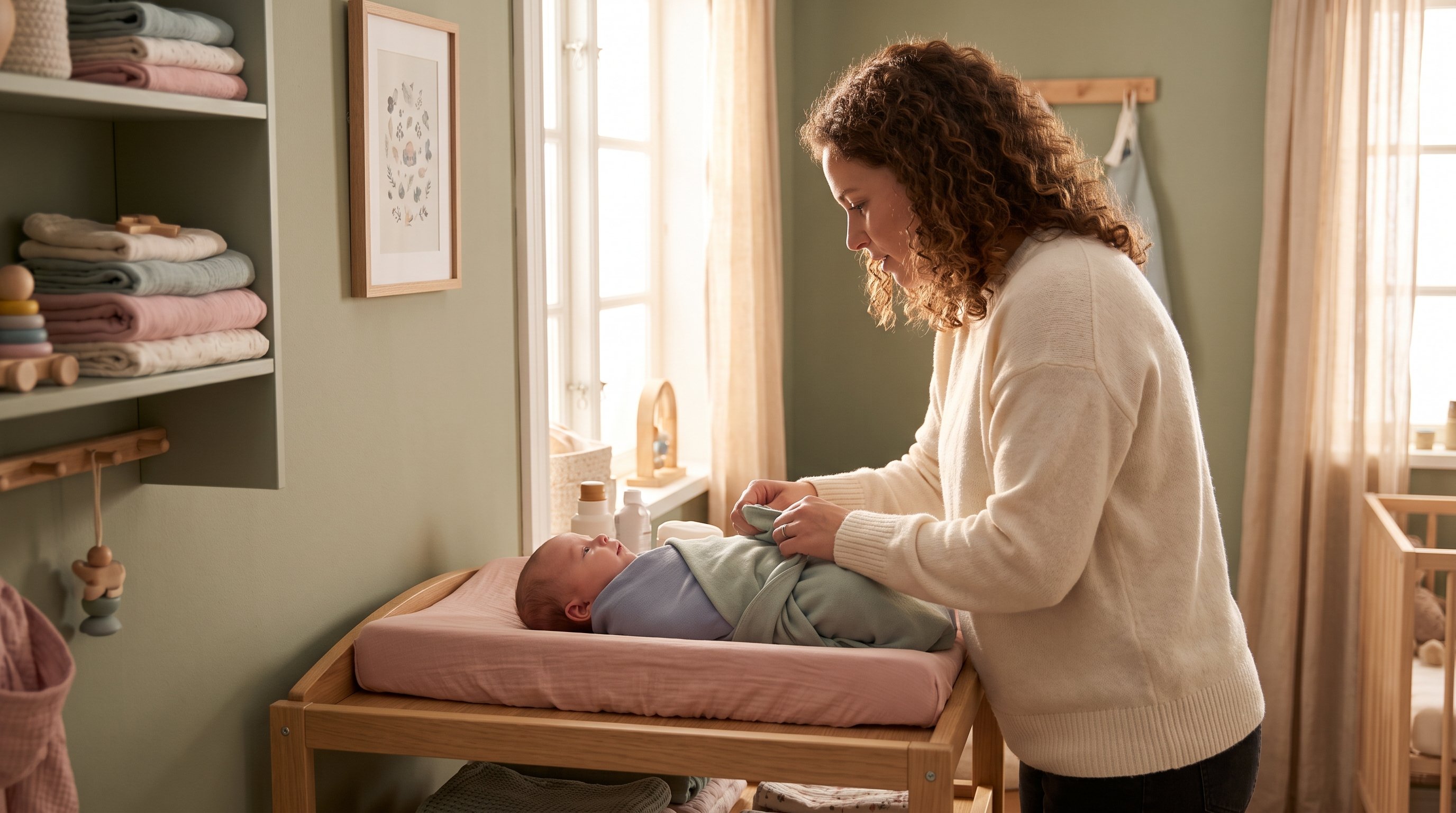
This is one order of steps worth repeating until it's automatic, done on a flat, firm surface.
The Fold, Step by Step
- Lay the blanket flat in a diamond, with the top corner folded down to make a straight edge.
- Place the baby on their back with shoulders just below the folded edge.
- Bring one side across the body and tuck it snugly under the opposite arm and back.
- Fold the bottom point up and over the feet, leaving room for knees to bend.
- Bring the last side across and tuck it in, checking the hips still have room to move.
Fitting Swaddling Into a Newborn's Actual Nights
Nobody practises a swaddle fold in daylight with a calm baby - it's usually done half-asleep, one-handed, with a baby who's already fussing.
Doing the same fold in the same order every time, even badly, builds the kind of muscle memory that holds up at 3am.
It's also the sort of small, repeated newborn routine worth jotting down somewhere - Guided Memory Pages give a spot to note what actually worked during those early weeks, so it's not lost once the swaddling stage passes.
When Newborns Usually Outgrow the Swaddle
There's no fixed date for this - it depends on the baby, not the calendar.
The clearest sign is rolling, or trying to: once a baby shows signs of rolling onto their side or front, a swaddle that pins the arms down is no longer the right fit for that stage.
In the weeks before that, it's common for a swaddle to need less and less tightness as a baby gets stronger and more active, which is a normal part of the shift away from it.
Common Mistakes That Undo a Good Swaddle
Wrapping the Hips Too Tight
A flat, straight-legged wrap puts pressure where the joints need room; leave slack at the bottom fold so knees can bend up and out.
Covering the Face or Neck With Loose Fabric
Extra fabric bunched near the head can shift during the night; tuck every loose end firmly so nothing sits near the face.

Using a Blanket That's Too Small or Too Large
A blanket that's too short won't hold the fold and one that's too big creates loose fabric; match the size to the baby rather than forcing one blanket to work at every stage.
Swaddling After Rolling Starts
Once a baby can roll, arms need to be free to help them move; that's the point to stop swaddling the arms in, not a point to wrap tighter.
Giving Up After One Messy Attempt
The first few folds rarely look neat; the fold gets faster and tidier with repetition, not with a different blanket or a different method.
Keeping the Swaddling Stage With Guided Memory Pages
Swaddling is one of those newborn-only habits that disappears fast once rolling starts, and it's easy to forget the small details later - which fold worked, which blanket, how long it lasted.
Welcome Baby is built around a quick quiz that tailors the book to your family, with Guided Memory Pages set aside specifically for the earliest days, the stage where swaddling lives.
Rather than a blank page asking for a polished story, it offers prompts and gentle guidance so a two-line note about tonight's swaddle attempt is enough to keep for later.

Prepare For Your Baby
Your Baby Plan
Making Swaddling Feel Normal, Not Stressful
Pick one fold, practise it a few times on a calm baby, and trust that it gets easier with repetition rather than with a better blanket.
Once the swaddle feels automatic, it stops being a nightly worry and starts being just one more small thing that gets done - and if it's worth remembering later, the right tool is there to hold that note.
FAQ
Keep the wrap snug across the chest and arms but loose around the hips, so the legs can bend and spread naturally. Always place the baby on their back to sleep, with the face and head left completely uncovered.
A swaddle can be loose at the hips and still hold firmly, because the chest wrap and tucked folds are what keep it in place. The hip area only needs room to move, not room to come undone.
Some newborns settle into it after a few tries, and some prefer one arm free rather than both tucked in. There's no single right way for every baby, so it's fine to adjust the fold rather than force the same method every night.
A quick note written down close to the moment holds up far better than trying to recall it months later. Welcome Baby's Guided Memory Pages give a dedicated spot for those earliest-days details, so the method that worked doesn't just fade away.
Share this post